Matcha Lingo 101: All the Slang, Terms, and Keywords Every Beginner Should Know
- Ceremonial grade and culinary grade are common market terms, not legally regulated grades. In general, ceremonial is used for drinking straight, while culinary is used for lattes, baking, and recipes.
- "Dirty matcha" has nothing to do with cleanliness — it usually means a matcha latte with a shot of espresso.
- A chasen is the bamboo whisk, and a chawan is the bowl. Knowing these two words covers the most common matcha equipment vocabulary.
- Umami is not just a buzzword — it refers to the savory, rounded taste often found in higher-quality matcha.
- "Matcha girlie" is social-media slang for someone whose lifestyle or aesthetic strongly revolves around matcha. It is playful, not a serious category.
Wait, There's a Whole Vocabulary?
Walk into a good café, open TikTok, or browse matcha brands online and you'll run into a lot of words that may not mean anything yet: ceremonial grade, usucha, dirty matcha, umami, chasen, matcha flight. Some are traditional Japanese tea terms, some are café shorthand, and some come from social media.
The good news: you do not need to memorize all of it to enjoy matcha. But knowing a few terms can make the experience easier — you will understand what you are ordering, why one matcha costs more than another, and what the tools are actually called.
This is a casual guide to matcha lingo: the grades, the drink names, the tools, the social-media slang, and the science words that sound intimidating but are actually simple.
The Basics: Matcha Grades and What They Actually Mean
If you learn nothing else, learn this distinction: ceremonial grade and culinary grade are common terms in the Western matcha market, but they are not legally regulated grading systems.
Ceremonial Grade
Ceremonial-grade matcha generally refers to matcha intended to be whisked with water and enjoyed on its own. It is often made from younger tea leaves, processed into tencha, and ground into a fine powder.
Good ceremonial-style matcha is usually bright green, smooth, and less bitter when prepared correctly. It often has a rounded, savory quality known as umami.
Ceremonial grade is best for drinking straight. If you are whisking matcha with water and want to taste the matcha itself, this is usually the category to look for.
Culinary Grade
Culinary-grade matcha usually refers to matcha intended for lattes, baking, smoothies, ice cream, and recipes. It may have a stronger, more robust flavor that can stand up to milk, sweeteners, and other ingredients.
Culinary grade is best for mixing. It can be a practical choice when matcha is one ingredient among many rather than the main flavor.
A Quick Word on "Premium Grade" and Other Marketing Terms
You may also see terms like "premium grade," "latte grade," "barista grade," and "classic grade." These are brand-created terms and may mean different things from one company to another.
The most reliable approach: look at the intended use, color, freshness, origin transparency, texture, and taste. A vivid green, smooth, fresh-tasting matcha is usually a better sign than the grade name alone.
Simply put: if you're whisking it into water and drinking it plain, choose a smoother drinking-grade matcha. If you're adding milk, sugar, or flour, a culinary or latte-style matcha can work well.
The Bar Cart: Drink Names You'll See on Menus
Matcha drinks have moved far beyond "hot or iced." Here is what common menu terms usually mean.
Matcha Latte
The café baseline: whisked matcha combined with steamed milk for a hot version, or cold milk over ice for an iced version. It is often sweetened unless you ask otherwise.
Dirty Matcha
A matcha latte with a shot of espresso added. "Dirty" is coffee-culture shorthand for adding espresso to a drink that does not normally contain it, similar to a dirty chai.
Matcha Americano
Matcha whisked with hot water and served without milk. It is similar in spirit to black coffee: simple, direct, and focused on the taste of the matcha itself.
Matcha Lemonade
Matcha combined with lemonade over ice. The citrus brightens matcha's earthy notes and makes the drink refreshing, especially in warmer weather.
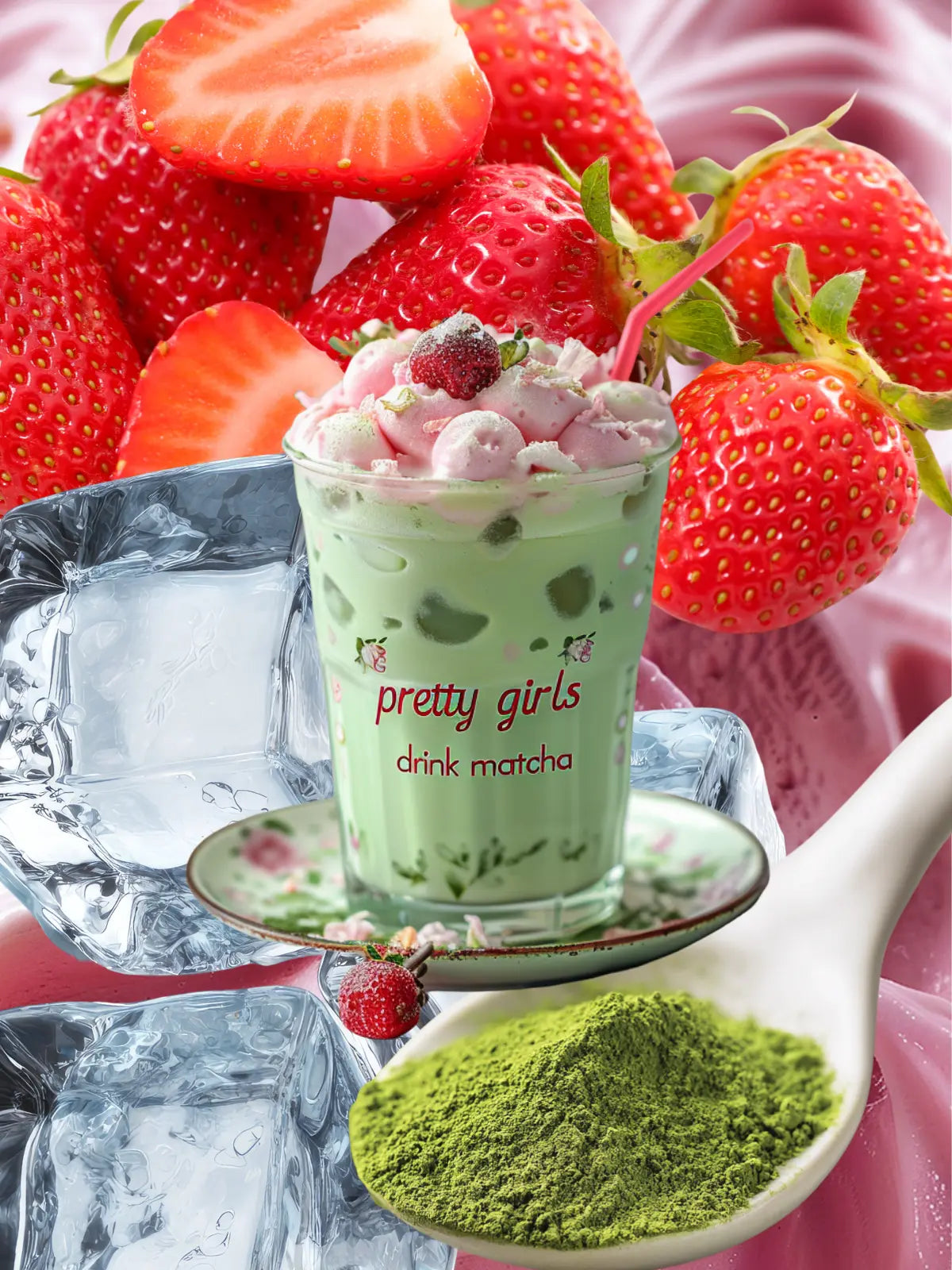
Strawberry Matcha Latte
A layered drink with strawberry purée or syrup, milk, and matcha. It is popular partly because the green-and-pink layers are visually striking.
Matcha Flight
A tasting set of multiple matchas served side by side. This is useful if you want to compare different origins, cultivars, grades, or flavor profiles.
Cloud Matcha / Matcha Foam
An iced matcha drink topped with a thick layer of matcha cold foam or whipped cream-style foam. It is more indulgent and often designed to be visually appealing.
The Tools: Japanese Names for Matcha Equipment
You do not need traditional tools to enjoy matcha, but knowing the names can make shopping and preparation easier.
| Tool | Japanese Name | What It Does |
|---|---|---|
| Bamboo whisk | Chasen (cha-sen) | Whisks matcha into water and helps create foam |
| Bamboo scoop | Chashaku (cha-sha-ku) | Used to scoop and measure matcha powder |
| Matcha bowl | Chawan (cha-wan) | Wide bowl designed for whisking matcha |
| Linen cloth | Chakin (cha-kin) | Used in tea ceremony to wipe the bowl |
| Tea caddy | Natsume (nat-su-me) | Small container used for matcha in tea ceremony |
| Sifter | Furui (fu-ru-i) | Fine mesh tool used to remove clumps from matcha powder |
The two terms you are most likely to hear in everyday matcha conversation are chasen for the whisk and chawan for the bowl.
Fun fact: A traditional chasen is carved from a single piece of bamboo. To help it last longer, rinse it with water only, let it air dry, and avoid storing it with the tines crushed.
Matcha on Social Media: The Slang You'll Actually Hear
Matcha culture online has created its own vocabulary. Some terms are useful, some are playful, and some will probably change quickly.
"Matcha Girlie" or "Matcha Girl"
A playful term for someone whose lifestyle, taste, or aesthetic revolves around matcha. It often shows up in videos about morning routines, café visits, matcha reviews, and home drink setups.
Despite the wording, the term is not strictly about gender. It is more of an internet identity or vibe.
"Dirty Matcha"
Dirty matcha means matcha plus espresso. It is not a cleanliness comment, and it is not a judgment — it is simply café slang.
"Matcha Flight"
A tasting format where multiple matchas are sampled side by side. This is especially useful if you want to compare flavor differences between regions, cultivars, or grades.
"Usucha" and "Koicha"
These are traditional Japanese terms, not TikTok slang, but they now appear more often on specialty café menus.
- Usucha (oo-soo-cha): "Thin tea." This is the lighter, frothier preparation most people think of when they drink matcha.
- Koicha (koy-cha): "Thick tea." This uses more matcha and less water, creating a dense, syrupy texture. It is associated with formal tea ceremony and is not simply a stronger latte-style matcha.
"Matcha Aesthetic"
The visual and lifestyle style associated with matcha: green tones, ceramic bowls, bamboo tools, calm mornings, café interiors, and soft natural lighting. It is partly about the drink and partly about the mood around it.
Words You Can Ignore
Some internet terms around matcha are more about social-media discourse than the drink itself. If a term feels like drama rather than useful information, you probably do not need it to enjoy matcha.
The Science Words That Aren't as Scary as They Sound
Matcha's wellness reputation comes with scientific vocabulary. These words appear on packaging, blogs, and menus, but they are easier to understand than they look.
L-Theanine
L-theanine is an amino acid naturally found in tea. It has been studied for its relationship with relaxation and attention, especially when consumed alongside caffeine. This is one reason many people describe matcha as feeling smoother than coffee, although individual experiences vary.[1]
Catechins / EGCG
Catechins are naturally occurring tea polyphenols. EGCG, short for epigallocatechin gallate, is one of the most studied catechins in green tea and matcha.[2]
Because matcha is consumed as whole powdered tea leaves rather than steeped and discarded leaves, it can provide more tea solids per serving than steeped green tea. The exact amount varies by product, serving size, growing conditions, and storage.
Umami
Umami is often called the "fifth taste," alongside sweet, salty, sour, and bitter. It is savory, rounded, and sometimes described as brothy or creamy. In matcha, umami is associated with amino acids developed during shade-growing.
If matcha tastes very grassy, bitter, or flat, it may be lower quality, stale, overused, or prepared with water that is too hot.
Chlorophyll
Chlorophyll is the green pigment in plants. Matcha's vivid green color is partly connected to the pre-harvest shading process, which can increase chlorophyll in tea leaves. Color is one helpful quality signal, although it should be considered alongside freshness, aroma, texture, and taste.
Simply put: L-theanine is an amino acid, catechins are tea polyphenols, umami is savory taste, and chlorophyll gives plants their green color.
How to Order Matcha Like You Know What You're Doing
At a Café
- "I'll have a hot matcha latte with oat milk, half sweet." A clear, standard order if you want a creamy drink without too much sweetness.
- "Dirty matcha latte, please." This means you want espresso added. If the barista looks confused, say "matcha latte with a shot of espresso."
- "What matcha do you use?" A good café should be able to tell you the brand, grade, or origin.
- "Can I get that unsweetened?" Many matcha lattes are sweetened by default, especially at chain cafés.
When Shopping for Matcha
- "Is this intended for drinking straight or for recipes?" This is often more useful than relying only on grade names.
- "When was this milled or opened?" Matcha is sensitive to air, light, and heat, so freshness matters.
- "Where is this from?" Japan is the baseline. Uji, Nishio, Shizuoka, Kagoshima, and Yame are all recognized Japanese tea regions.
- "How should I store it?" Keep matcha sealed, away from light, heat, and moisture.
The Bottom Line
Matcha vocabulary breaks down into three layers:
- The practical layer — grades, drink names, and tools that help you order or prepare matcha
- The culture layer — traditional terms like usucha, koicha, chasen, and chawan
- The internet layer — slang, aesthetics, and trends that evolve quickly
You do not need all three. Plenty of people drink matcha every day knowing only two phrases: "matcha latte" and "oat milk, please."
But if you have ever stared at a menu wondering what "dirty" means, or felt like you were missing something when people talked about umami, now you have the decoder ring.
References
- Nobre AC, et al. L-theanine, a natural constituent in tea, and its effect on mental state. Asia Pacific Journal of Clinical Nutrition. 2008;17 Suppl 1:167-8.
- Kimura M, et al. The relation between single/double or repeated tea catechin ingestions and plasma antioxidant activity in humans. European Journal of Clinical Nutrition. 2002;56(12):1186-1191.
- Weiss DJ, Anderton CR. Determination of catechins in matcha green tea by micellar electrokinetic chromatography. Journal of Chromatography A. 2003;1011(1-2):173-180.
This article is for educational purposes only. Matcha is a food product and is not intended to diagnose, treat, cure, or prevent any disease. Individual experiences may vary.

Written by Nippon Matcha