Matcha Across Japan: A Regional Tasting Tour
Key Takeaways
- Japan produces matcha across four major regions — Uji, Nishio, Shizuoka, and Kagoshima — each with a distinct flavor profile.
- Uji matcha is widely regarded as the gold standard for ceremonial-grade matcha.
- Terroir affects matcha through climate, soil, fog, temperature variation, and harvest timing.
- Comparing matcha side by side helps reveal regional differences more clearly.
Walk into a tea shop in Japan and the first question you'll hear isn't "ceremonial or culinary?" It's "where is it from?"
Japan's matcha-producing regions are as distinct as wine appellations. The same tea cultivar grown in Uji versus Kagoshima can produce a noticeably different bowl of matcha — different color, different aroma, different finish. And while Uji holds legendary status, the other regions produce matcha worth knowing, each with its own personality.
Why Terroir Matters for Matcha
Terroir refers to the complete environment in which a crop grows: soil composition, climate, altitude, sunlight hours, fog frequency, and temperature swings between day and night.
While tea terroir research is still developing compared to wine science, studies suggest that climate, soil, altitude, and farming conditions influence tea chemistry and sensory characteristics. For matcha specifically, factors such as shade, temperature, and soil conditions can influence compounds like L-theanine, catechins, and chlorophyll, which shape flavor and aroma.
Because matcha involves consuming finely ground tea leaves rather than only an infusion, regional differences in composition can become especially noticeable in the final cup.
Uji, Kyoto: The Gold Standard
Tasting Profile: Uji
Color: Vibrant emerald green
Aroma: Sweet grass, steamed edamame, hint of nori
Flavor: Deep umami, gentle sweetness, clean finish
Mouthfeel: Creamy and full-bodied
Best for: Traditional preparation, usucha, koicha, drinking straight
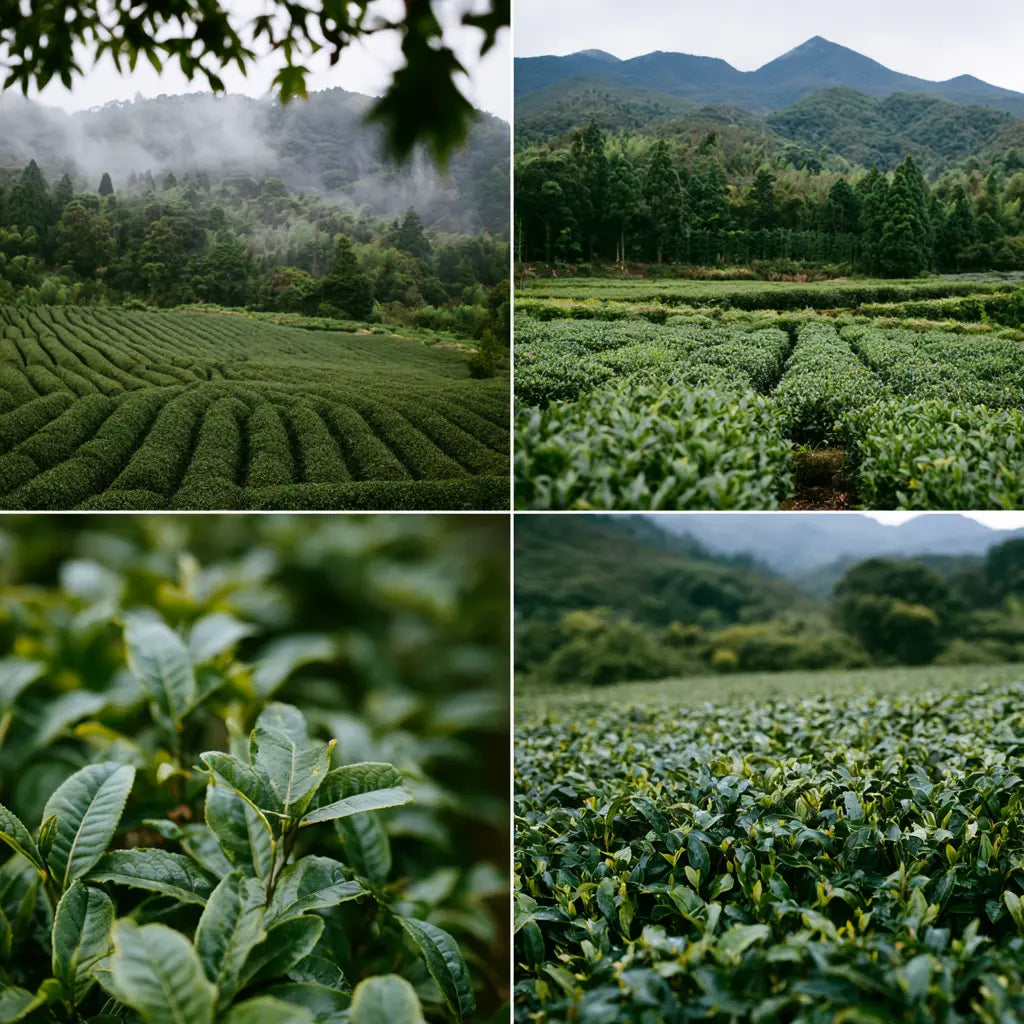
Uji sits in a basin between Kyoto and Nara, where the Uji River creates a microclimate of persistent morning mists. This natural fog cover provides diffuse, filtered light even before artificial shade cloth is applied.
The result is a matcha style known for clarity, balance, pronounced umami, gentle sweetness, and a soft finish. This is one reason Uji matcha often commands premium prices and is widely regarded as a benchmark for high-end ceremonial matcha.
Nishio, Aichi: The Everyday Classic
Tasting Profile: Nishio
Color: Bright green, slightly yellow-toned
Aroma: Fresh-cut grass, sweet corn, light nuttiness
Flavor: Medium umami, mild sweetness, gentle vegetal finish
Mouthfeel: Smooth and medium-bodied
Best for: Everyday drinking, usucha, matcha lattes
Nishio, located in Aichi Prefecture, is one of Japan's largest and most historically important matcha-producing regions by volume.
Compared with Uji, Nishio is generally warmer and less consistently misty, so producers often rely more heavily on artificial shade systems during cultivation. Nishio matcha is especially valued for consistency, accessibility, and everyday usability.
Shizuoka: The Mountain Tea
Tasting Profile: Shizuoka
Color: Deep forest green
Aroma: Steamed spinach, fresh mountain air, hint of pine
Flavor: Assertive, vegetal, brisk, slightly mineral
Mouthfeel: Medium body with a slight drying finish
Best for: Recipes, bold palates, culinary use
Shizuoka Prefecture, sitting in the shadow of Mount Fuji, is Japan's largest tea-producing region overall, though it is more closely associated with sencha than matcha.
Many tea-growing areas in Shizuoka contain volcanic-influenced soils and mountainous growing conditions, which are often linked to a brisk, grassy, and mineral-leaning tea profile.
Kagoshima: The Southern Expression
Tasting Profile: Kagoshima
Color: Vivid yellow-green
Aroma: Fresh bamboo, cucumber, light melon-like sweetness
Flavor: Light-bodied, mildly sweet, delicate umami
Mouthfeel: Clean and lighter-bodied
Best for: Beginners, lighter drinking, approachable matcha styles
Kagoshima, at the southern tip of Kyushu, is Japan's warmest major tea-growing region. Its longer growing season and earlier harvest timing contribute to a softer, lighter-bodied flavor profile compared with cooler northern regions.
Kagoshima matcha is often appreciated by drinkers who find traditional matcha too savory or intense, or by those transitioning from lighter green teas.
How to Do a Regional Tasting at Home
- Source at least two regions. Uji makes the best reference point because many people associate it with ceremonial-grade matcha.
- Use identical preparation. Same water temperature, same amount of powder, same whisking method.
- Taste side by side. Direct comparison reveals differences more clearly.
- Use a simple tasting structure: color → aroma → first sip → mouthfeel → finish.
- Cleanse between tastings. Room-temperature water and a neutral cracker work well.
What the Region Says About Quality
Region is a starting point, not a guarantee. A carefully produced Nishio matcha can outperform a poorly produced Uji matcha. Geography shapes potential, but producer decisions like shade duration, harvest timing, de-stemming, storage, and grinding quality determine the final result.
When you drink our ceremonial-grade matcha, you're experiencing one interpretation of Uji terroir: balanced sweetness, refined umami, and the smooth finish that made the region internationally respected.
Regional Comparison at a Glance
References
-
Ahmed S, Unachukwu U, Stepp JR, et al. Pu-erh tea tasting in Yunnan, China: correlation of perceived quality with chemical composition and growing conditions. Journal of Ethnopharmacology. 2010;132(1):176-185.
-
Ku KM, Choi JN, Kim J, et al. Metabolomics analysis reveals the compositional differences of shade-grown tea. Journal of Agricultural and Food Chemistry. 2010;58(1):418-426.
-
Lee JE, Lee BJ, Chung JO, et al. Metabolomic unveiling of a diverse range of green tea metabolites dependent on geography. Food Chemistry. 2015;174:452-459.

Written by Nippon Matcha