Hot Matcha Latte: How to Make It Without a Whisk
Key Takeaways
- You can make a smooth, clump-free matcha latte without a bamboo whisk using three simple tools: a mason jar, a fork, or a blender.
- Water temperature is critical — anything above 185°F (85°C) scorches matcha, turning it bitter and grassy.
- A good latte starts with good matcha. Ceremonial-grade powder dissolves more easily and tastes naturally sweeter than culinary-grade.
- Sifting your matcha before mixing prevents 90% of texture issues before they start. Don't skip this step.
A bamboo whisk — the chasen — is the traditional tool for making matcha, and for good reason. Its dozens of fine tines cut through clumps that spoons can't touch, producing a silky, frothy bowl in under a minute. But what if you don't own one? Maybe you're traveling. Maybe your whisk wore out. Maybe you're just getting into matcha and haven't assembled the full toolkit yet.
Here's the thing: you can make an excellent hot matcha latte without a whisk. It won't have quite the same microfoam texture as a traditionally prepared bowl, but with the right technique it'll be smooth, clump-free, and deeply satisfying. Here are three reliable methods, from quickest to most refined.
Method 1: The Jar Shake (Easiest)
This is the fastest, lowest-effort way to disperse matcha powder into liquid — perfect when you're in a hurry.
What you need: A mason jar or any container with a tight-fitting lid.
- Sift 1 teaspoon (2g) of matcha powder into the jar. Sifting is non-negotiable — it breaks up fine clumps that even whisking struggles with and guarantees a smooth final latte.
- Add 2 tablespoons (30ml) of warm water at around 175°F (80°C). Not boiling. Boiling water scorches matcha's delicate amino acids and releases harsh, bitter-tasting catechins.
- Screw the lid on tight and shake vigorously for 20–30 seconds. You'll hear the liquid sloshing — that's the matcha dispersing evenly into the water.
- Pour this concentrated matcha shot into your mug.
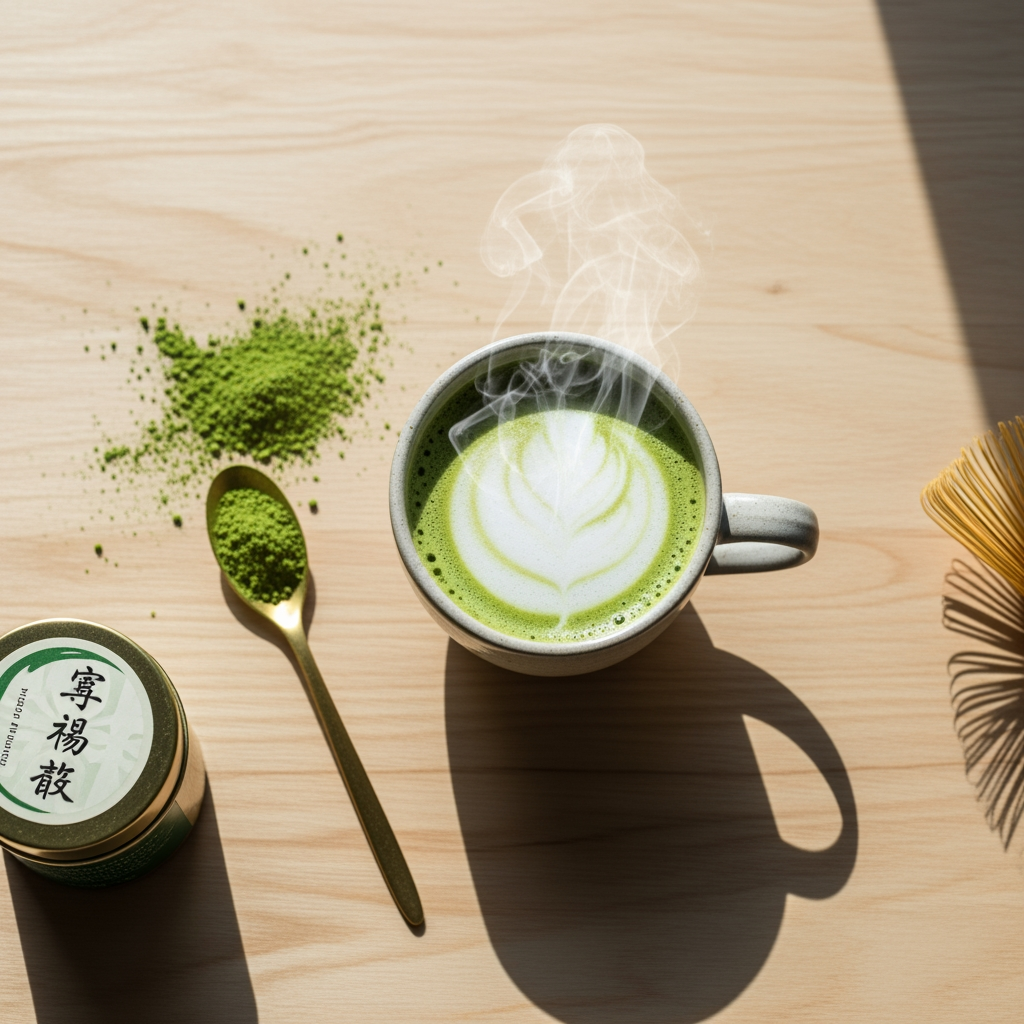
- Heat ¾ cup (180ml) of milk — oat milk works beautifully for a naturally sweet, creamy latte — and pour it over the matcha base. Stir once and you're done.
Result: A clean, balanced latte with no clumps. It won't have the frothy cap that a whisk produces, but the flavor will be spot-on. This method works particularly well with oat milk, which carries matcha's vegetal notes better than dairy.
Method 2: The Fork Stir (Most Accessible)
If shaking feels messy or you don't have a jar handy, a fork and a small bowl will get you surprisingly close to whisk territory.
What you need: A small bowl and a regular metal or bamboo fork.
- Sift 1 teaspoon (2g) of matcha into the bowl.
- Add 2 tablespoons (30ml) of warm water at 175°F (80°C).
- Use the fork like you'd whip eggs: press the tines flat against the bottom of the bowl and vigorously zigzag back and forth. This creates turbulence that breaks up clumps more effectively than a simple circular stir. Go for 30–45 seconds — longer than you think you need.
- You're looking for a smooth, opaque green liquid with no visible specks. If you still see dark clumps, keep going.
- Pour into a mug, add your heated milk, and stir to combine.
Result: Slightly more effort than shaking, but better texture control. If the jar method doesn't appeal to you, this is your best bet — and it's the closest analog to actual whisk technique.
Method 3: The Blender (Smoothest)
If you want the closest thing to café-quality texture without traditional tools, reach for a blender.
What you need: A small personal blender, immersion blender, or electric milk frother.
- Sift 1 teaspoon (2g) of matcha into the blender cup.
- Add 2 tablespoons (30ml) of warm water at 175°F (80°C) and pulse a few times to form a smooth paste.
- Add your ¾ cup (180ml) of warm milk directly to the blender and blend on low for 10–15 seconds.
- The result will be slightly frothy and evenly incorporated — the closest you'll get to a whisk-made latte. Pour into a mug and enjoy immediately.
Result: The creamiest, most consistent texture of the three methods. If you already own a small blender or frother, this is easily the top choice. An immersion blender works just as well — just blend in the mug itself to save dishes.
Common Mistakes to Avoid
Using boiling water. Matcha's flavor chemistry is delicate. Between 160–180°F (70–80°C), the sweet, umami amino acids dominate. Above 185°F, bitter-tasting catechins take over and the L-theanine — responsible for matcha's characteristic calm-alertness [1] — degrades. Let your kettle sit for 2–3 minutes after it boils, or use a thermometer if you have one.
Skipping the sift. Matcha is ground to an almost impossibly fine consistency — roughly 5–10 microns. This huge surface area means it clumps aggressively when exposed to humidity. A 10-second sift through a fine mesh strainer prevents the vast majority of texture issues before they start. It's the single highest-impact step in this entire article.
Using too much matcha. A standard 2g serving (roughly 1 level teaspoon) contains approximately 70mg of caffeine — about the same as a single espresso shot — plus roughly 40–50mg of L-theanine, the amino acid that smooths out caffeine's edges [1][2]. Doubling the dose won't double the enjoyment — it'll just make your latte bitter and your afternoon jittery.
One Matcha Tip
If you make lattes regularly — whisk or no whisk — store your matcha in the refrigerator after opening. Matcha oxidizes faster than any other tea because of its enormous surface area. A cool, dark, airtight container preserves both the vibrant green color and the delicate flavor for weeks longer than a cupboard at room temperature. The color is a reliable freshness indicator: when your matcha shifts from bright jade to olive-drab, it's time for a new tin.
Looking for a matcha that dissolves easily and tastes smooth even without a whisk? Ceremonial-grade matcha, stone-ground from shade-grown tencha leaves in Uji, Kyoto, produces a naturally sweeter latte with less bitterness than culinary-grade alternatives. Our 1.06oz starter tin is a good place to begin.
These statements have not been evaluated by the FDA. This product is not intended to diagnose, treat, cure, or prevent any disease.
References
- Nobre AC, Rao A, Owen GN. L-theanine, a natural constituent in tea, and its effect on mental state. Asia Pacific Journal of Clinical Nutrition. 2008;17(Suppl 1):167-168. PubMed: 18296328
- Dietz C, Dekker M. Effect of green tea phytochemicals on mood and cognition. Current Pharmaceutical Design. 2017;23(19):2876-2905. PubMed: 28056735
- Kochman J, Jakubczyk K, Antoniewicz J, Mruk H, Janda K. Health benefits and chemical composition of matcha green tea: a review. Molecules. 2021;26(1):85. PubMed: 33375458

Written by Nippon Matcha