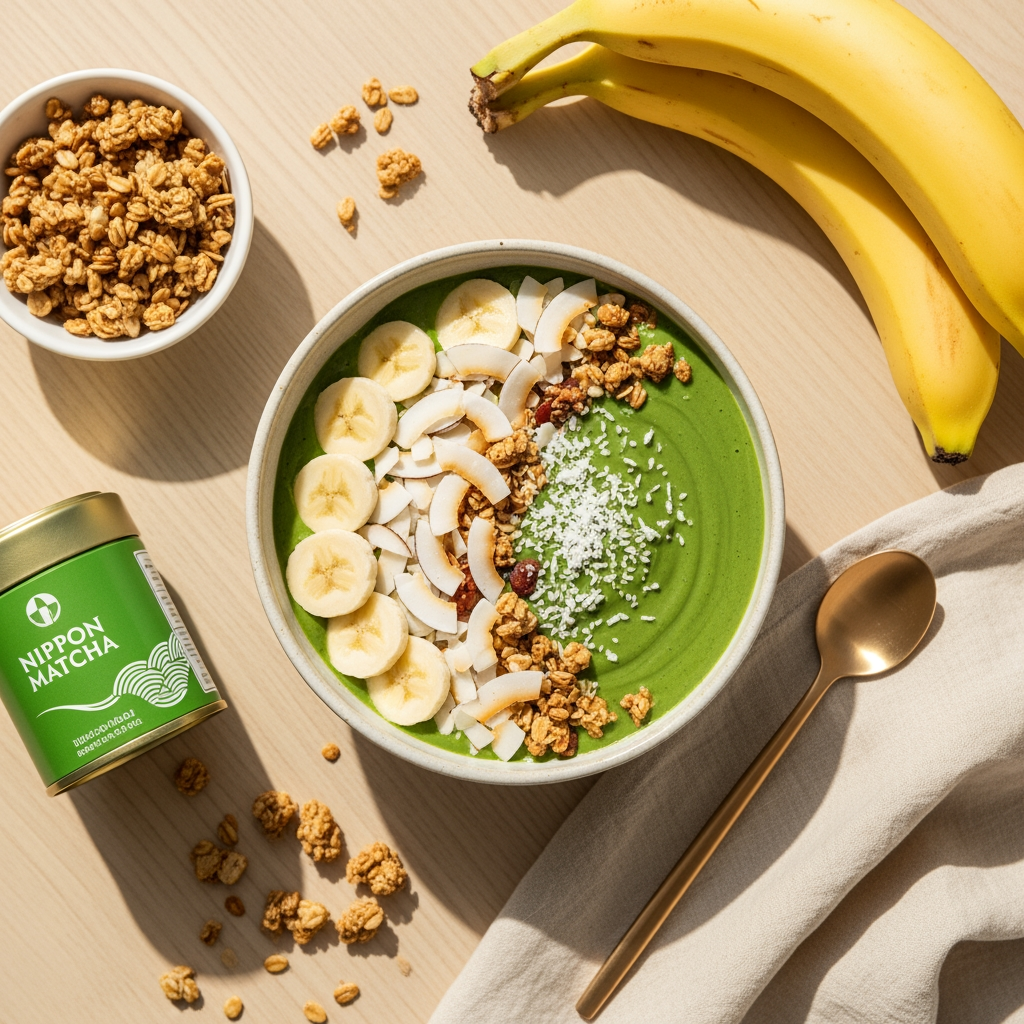
Matcha Smoothie Bowl with Banana and Coconut
🔑 Key Takeaways
- A 2g serving of ceremonial matcha adds roughly 70mg of caffeine and 28mg of L-theanine to this smoothie bowl — the same compounds that give matcha its characteristic calm-alertness profile.
- Banana and coconut provide slow-digesting carbohydrates and medium-chain triglycerides (MCTs), which may contribute to steady energy release across the morning.
- The whole recipe comes together in under 10 minutes and doesn't require any cooking — just a blender and a bowl.
- One bowl delivers approximately 12g of fiber and 15g of protein when prepared as written, making it a substantial breakfast that goes beyond a standard smoothie.
A smoothie bowl is essentially a smoothie you eat with a spoon — thicker, colder, and topped with ingredients that add texture and staying power. Adding matcha doesn't just turn the whole thing a vivid jade green. It introduces the caffeine and L-theanine combination that matcha drinkers know well: a more gradual, less jittery energy curve compared to coffee, according to several human trials on the caffeine-L-theanine interaction [1][2].
This version leans on banana for natural sweetness and creaminess, coconut for fat and texture, and matcha for both color and focus. No added sugar, no protein powder with ingredients you can't pronounce. It's a breakfast that looks like it belongs in a café but takes about as much effort as pouring cereal.
Ingredients
For the base:
- 2 frozen ripe bananas (peel before freezing)
- 1/2 cup plain Greek yogurt or coconut yogurt
- 1/4 cup unsweetened coconut milk (or any milk)
- 2 teaspoons Nippon Matcha ceremonial matcha (roughly 2g)
- 1 tablespoon chia seeds
- 1/2 teaspoon vanilla extract
For the toppings:
- 1/2 fresh banana, sliced
- 2 tablespoons toasted coconut flakes
- 1 tablespoon granola
- 1 teaspoon hemp hearts (optional)
- Drizzle of honey or maple syrup (optional)
Instructions
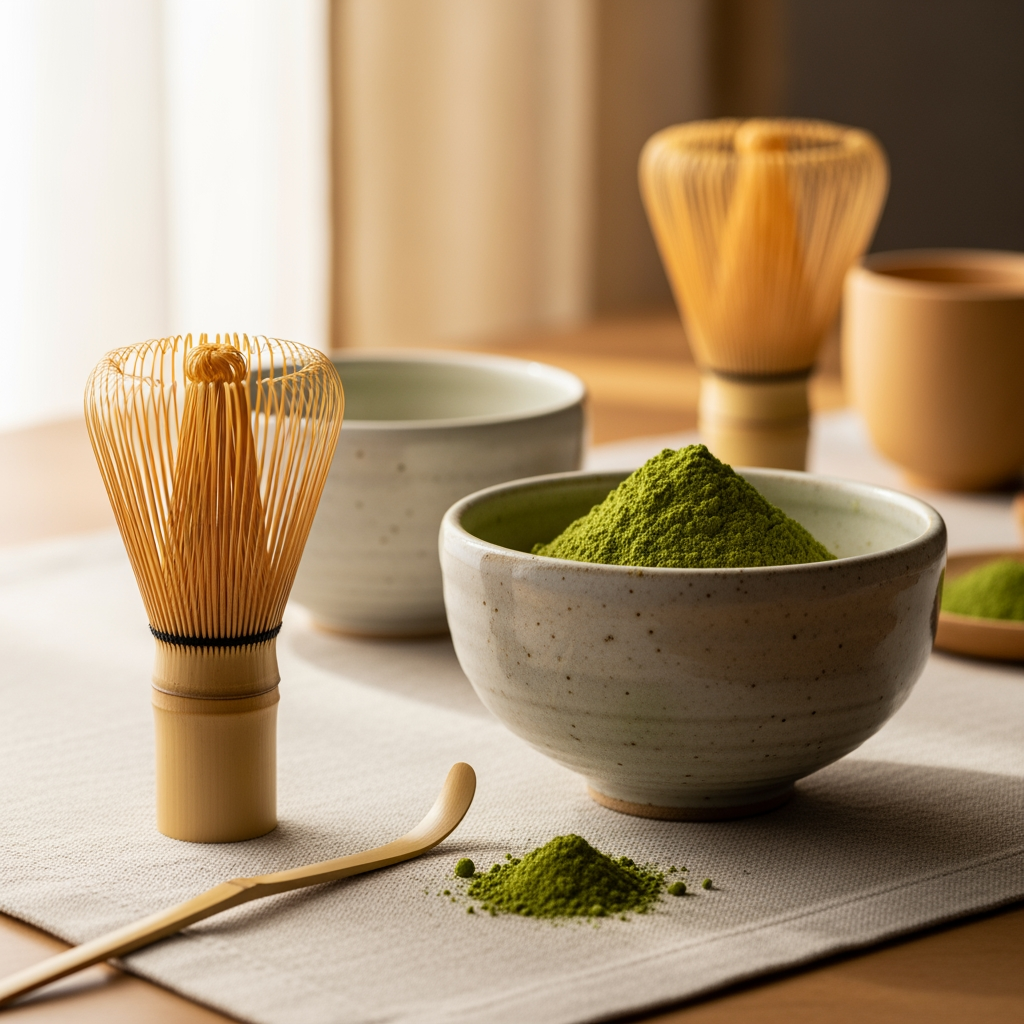
- Prep the matcha first. Sift 2 teaspoons of matcha into a small bowl, add 2 tablespoons of warm water (not boiling — about 175°F / 80°C), and whisk until smooth and no clumps remain. This extra 30 seconds prevents green flecks in the final bowl.
- Blend the base. Add the frozen bananas, yogurt, coconut milk, whisked matcha, chia seeds, and vanilla to a blender. Blend on high until completely smooth and the mixture is thick enough that it doesn't easily slide off a spoon. If it's too thick to blend, add coconut milk a tablespoon at a time. Too thin? Add another few pieces of frozen banana.
- Pour and top. Scrape the smoothie base into a bowl. Working quickly so the base stays cold, arrange the banana slices, coconut flakes, granola, and hemp hearts in rows or clusters on top.
- Eat immediately. A smoothie bowl's appeal is the contrast between the cold, thick base and the crunchy toppings. It won't wait for you, so dig in right away.
The Matcha Tip
Sift, then whisk matcha separately before it hits the blender. Matcha is a finely ground powder that clumps easily — especially when it meets cold liquid. If you dump it straight into the blender with everything else, you'll likely end up with small undissolved specks. Whisking it into a small amount of warm water first ensures it disperses evenly throughout the base, giving you a uniform green color and consistent flavor in every spoonful.
Why This Works
The combination of ingredients here isn't arbitrary — it's designed around how the body processes different macronutrients across the morning. Frozen banana provides the thick texture and natural sweetness without added sugar, while also contributing resistant starch that digests slowly [3]. Coconut milk and flakes add fat that may help moderate the absorption rate of caffeine, though direct research on this effect is limited. The chia seeds and hemp hearts bring fiber and plant-based protein, which are associated with increased satiety in several clinical studies.
And the matcha? It's the star — visually and functionally. A 2g serving contributes roughly 70mg of caffeine alongside 28mg of L-theanine, an amino acid that multiple clinical trials have found promotes alpha-wave brain activity associated with relaxed alertness when paired with caffeine [1][2]. The practical result is a breakfast that energizes without the sharp spike-and-crash pattern some people experience with coffee alone.
The research above reflects findings from independent clinical trials, not claims about any specific product.
Swaps and Variations
- Vegan: Use coconut yogurt instead of Greek yogurt. The texture stays thick.
- Higher protein: Add a scoop of unflavored collagen or your preferred protein powder. Increase the liquid by 1-2 tablespoons to compensate.
- Lower sugar: Swap one of the frozen bananas for frozen zucchini or steamed-and-frozen cauliflower. You'll lose some sweetness but gain volume.
- Tropical version: Replace coconut milk with mango or pineapple juice, and top with fresh mango chunks and toasted macadamia nuts.
If you're looking for a ceremonial-grade matcha that performs well in recipes — meaning it's vibrant enough to color the bowl and smooth enough to drink on its own — our 1.06oz ceremonial matcha is a good place to start. It's sourced from Uji, Kyoto, and stone-ground to a fine consistency that blends cleanly in cold preparations.
*These statements have not been evaluated by the Food and Drug Administration. This product is not intended to diagnose, treat, cure, or prevent any disease.
References
- Haskell CF et al. The effects of L-theanine, caffeine and their combination on cognition and mood. Biological Psychology. 2008;77(2):113-122.
- Dietz C, Dekker M. Effect of Green Tea Phytochemicals on Mood and Cognition. Current Pharmaceutical Design. 2017;23(19):2876-2905.
- Lockyer S, Nugent AP. Health effects of resistant starch. Nutrition Bulletin. 2017;42(1):10-41.

Written by Nippon Matcha