
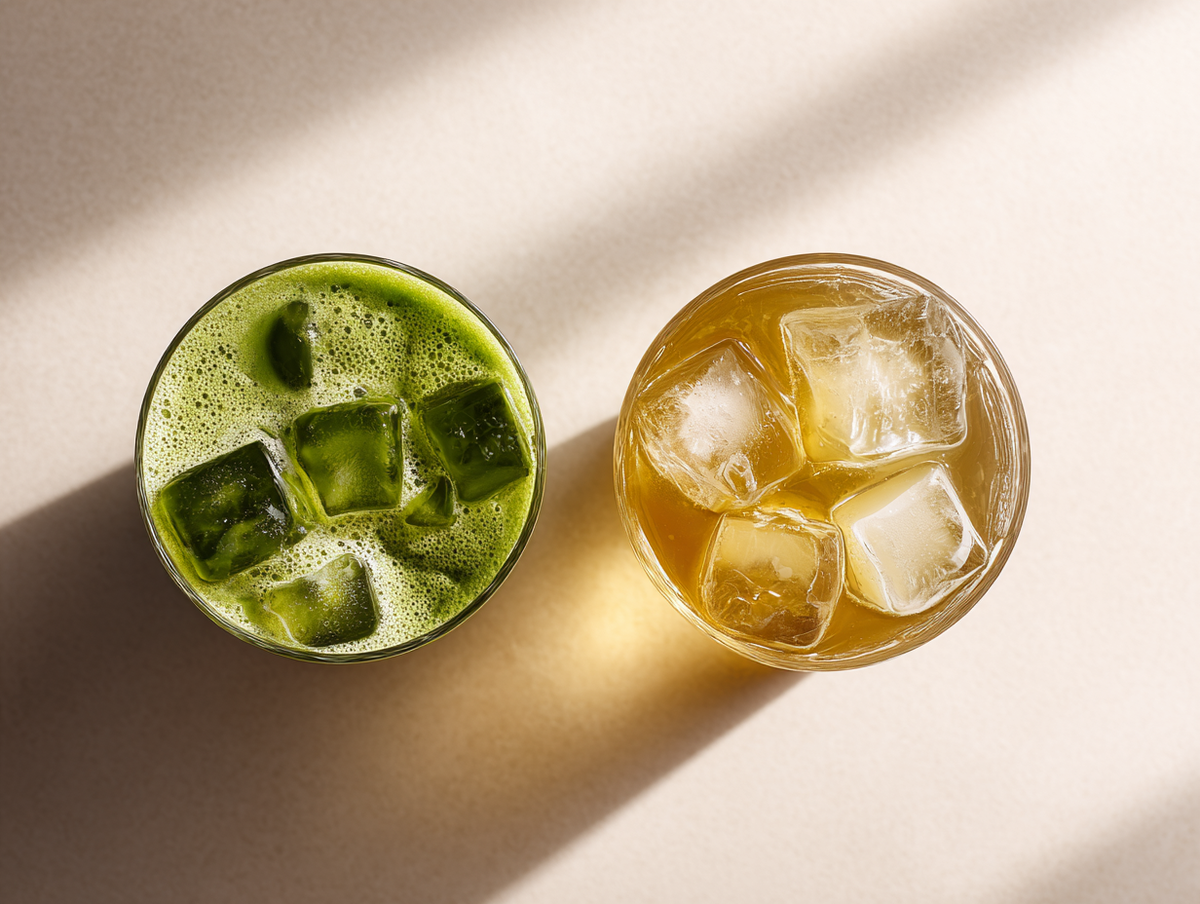
Matcha vs. Green Tea Benefits: What Science Says (And Why Matcha Wins)
Key Takeaways
- Matcha delivers up to 137 times more EGCG (a key antioxidant) than standard green tea because you consume the entire leaf rather than steeping and discarding it.
- L-theanine levels are significantly higher in matcha due to the shade-growing process, promoting a state of calm focus not typically achieved with regular green tea.
- Both matcha and green tea offer health benefits, but matcha provides a more concentrated nutritional profile per serving.
- The caffeine in matcha is released more gradually than coffee or even steeped green tea, thanks to L-theanine's modulating effect.
Published by Nippon Matcha
TL;DR: Matcha and green tea both come from the Camellia sinensis plant, but matcha delivers significantly more EGCG, L-theanine, chlorophyll, and antioxidants per serving because the whole leaf is consumed. That makes matcha a more concentrated option for calm focus, antioxidant intake, and daily wellness support.
Quick Answer: Is Matcha Healthier Than Regular Green Tea?
Yes. Matcha and green tea share many of the same beneficial compounds, but matcha is generally more concentrated because it is made from shade-grown tea leaves that are stone-ground into powder and consumed whole. In practical terms, that means matcha typically delivers more EGCG, more L-theanine, more chlorophyll, and more total antioxidant density per serving than standard brewed green tea.
Both drinks come from the same tea plant, but how they are grown, processed, and consumed creates a major nutritional difference.
What Makes Matcha Different From Regular Green Tea?
Green tea and matcha both come from Camellia sinensis, but they are prepared very differently.
With regular green tea, dried leaves are steeped in water and then discarded. That means you only consume the compounds extracted into the liquid.
With matcha, the tea leaves are stone-ground into a fine powder and whisked directly into water. Because you consume the whole leaf, you take in a much more concentrated amount of tea compounds per serving.
Why Matcha Is More Concentrated
- Shade-growing: Matcha plants are shaded before harvest, which increases chlorophyll and L-theanine.
- Young leaves: High-quality ceremonial matcha is made from the youngest leaves.
- Stone-grinding: Traditional milling helps preserve delicate compounds.
- Whole-leaf consumption: Nothing is discarded, so the nutritional density per serving is much higher.
Antioxidant Power: EGCG and Catechins
One of the main reasons people compare matcha and green tea is antioxidant content, especially EGCG (epigallocatechin gallate), one of the best-known catechins in green tea.
Research frequently cited in matcha discussions suggests that matcha can provide substantially more EGCG per serving than standard brewed green tea. This is one of the clearest examples of how whole-leaf consumption changes the nutritional profile.
Why EGCG Matters
EGCG is commonly studied for its antioxidant and anti-inflammatory properties. While matcha is not a treatment or supplement replacement, it is often used as a more concentrated food-based source of catechins.
Approximate EGCG Comparison
- Matcha: about 60–137mg per serving
- Brewed green tea: about 5–10mg per cup
That difference is one reason matcha is often described as being in a different category from ordinary green tea in terms of nutrient density.
L-Theanine: Why Matcha Is Known for Calm Focus
L-theanine is a naturally occurring amino acid found in tea, and matcha usually contains much more of it than standard green tea because of the shade-growing process used before harvest.
Many people describe matcha as creating a calmer, steadier kind of energy than coffee. A major reason for that reputation is the combination of caffeine and L-theanine.
Why L-Theanine Matters
- Often associated with relaxed alertness
- May help support attention and sustained focus
- Commonly described as helping smooth out caffeine intensity
This is the foundation of matcha’s “calm focus” reputation. Compared with brewed green tea, matcha is typically richer in this compound, especially when it is ceremonial-grade and shade-grown.
Matcha Energy vs Green Tea Energy
Matcha and brewed green tea both contain caffeine, but matcha usually delivers more per serving because you are consuming the entire leaf.
Approximate Caffeine Comparison
- Matcha: about 30–40mg per 1g serving; 60–70mg per 2g serving
- Regular green tea: about 25–40mg per cup
The difference is not just the amount of caffeine. Matcha is often experienced differently because it combines caffeine with much higher levels of L-theanine than standard green tea.
For many people, this creates a more sustained and smoother-feeling energy curve.
Metabolic and Daily Wellness Support
Green tea catechins are often studied for their role in fat oxidation and thermogenesis, and matcha delivers these compounds in a more concentrated form.
That said, it is important to set expectations correctly. Matcha can be a health-supportive daily beverage, but it is not a dramatic shortcut. Its value is better understood as part of a consistent daily routine rather than as a one-time metabolic hack.
In other words, matcha may support wellness habits, but it works best as a daily ritual rather than a miracle product.
Matcha, Chlorophyll, and Skin Support
One visible sign of high-quality matcha is its vibrant green color. That color reflects chlorophyll levels, which are elevated through shade-growing.
Matcha is also rich in catechins and antioxidants, which are commonly discussed in relation to oxidative stress and daily skin support. Some research on green tea catechins has explored connections to skin appearance and protection, although matcha should still be viewed as part of a broader wellness approach rather than a cosmetic solution on its own.
Why Ceremonial Grade and Shade-Growing Matter
If you are choosing matcha for health benefits, not all matcha is equal. Grade and growing method make a real difference.
What to Look For
- Shade-grown: supports higher L-theanine and chlorophyll levels
- First harvest: often associated with higher amino acid density and smoother taste
- Stone-ground: a more traditional method for preserving fine texture
- Japanese origin: especially respected growing regions such as Uji
These are not just marketing terms. They are the quality markers most closely associated with the flavor, texture, and nutritional concentration people expect from ceremonial-grade matcha.
Matcha vs. Regular Green Tea: At a Glance
| Factor | Matcha | Regular Green Tea |
|---|---|---|
| EGCG per serving | Higher | Lower |
| L-theanine per serving (2g) | Higher | Lower |
| Caffeine per serving (2g) | Moderate to higher | Lower to moderate |
| Chlorophyll content | Higher | Lower |
| Preparation | Whisked powder, whole leaf consumed | Steeped leaves, leaves discarded |
| Overall nutrient density | More concentrated | More diluted |
So Which One Should You Choose?
If you enjoy brewed green tea, it is still a beneficial beverage and can absolutely be part of a healthy lifestyle. But if your goal is to maximize antioxidant intake, L-theanine, and nutrient density per serving, matcha is the stronger choice.
The most noticeable advantages of matcha are:
- more concentrated antioxidants
- higher L-theanine levels
- smoother, steadier energy
- whole-leaf nutritional density
For people looking for a more potent daily tea ritual, matcha generally wins.
How to Choose the Best Matcha for Health Benefits
If you want the strongest nutritional profile, look for:
- ceremonial-grade matcha
- shade-grown leaves
- first-harvest selection
- stone-ground texture
- Japanese origin, especially Uji
These qualities are closely linked to the smooth flavor, bright green color, and higher concentration of the compounds people look for in premium matcha.
Try Matcha for Yourself
If you want to experience the difference between standard green tea and ceremonial-grade matcha, start with a high-quality powder that is shade-grown, first-harvest, and stone-ground.
Explore our ceremonial-grade matcha.
Frequently Asked Questions
What are the main health benefits of matcha?
Matcha is commonly valued for its antioxidant density, naturally occurring caffeine, L-theanine, and chlorophyll. It is often used to support calm focus and daily wellness.
Is matcha healthier than regular green tea?
Generally yes. Because matcha uses the whole leaf, it delivers a more concentrated amount of tea compounds per serving than brewed green tea.
How much EGCG is in matcha?
Matcha is often estimated to provide around 60–137mg of EGCG per serving, compared with much lower amounts in standard brewed green tea.
Does matcha help with focus?
Many people use matcha for focus because it contains both caffeine and L-theanine, a combination often associated with calm alertness.
Why does matcha have more L-theanine than green tea?
Because matcha is shade-grown before harvest, the leaves retain and accumulate more L-theanine than standard sun-grown tea leaves used for brewed green tea.
Is matcha good for skin?
Matcha contains antioxidants and catechins that are often discussed in relation to oxidative stress and daily wellness, including skin support.
Does matcha boost metabolism?
Green tea catechins are commonly studied for their role in fat oxidation and thermogenesis. Matcha delivers those compounds in a more concentrated form, but the effect is generally modest and best viewed as supportive rather than dramatic.
What is the best matcha for health benefits?
Ceremonial-grade, shade-grown, first-harvest matcha from Japan is generally the best choice if you want the highest-quality flavor and the strongest nutritional profile.
Published by Nippon Matcha. Discover ceremonial-grade matcha crafted for daily rituals at nipponmatcha.com.
Ready to Taste the Difference?
Nippon Matcha is first-harvest, stone-ground ceremonial-grade matcha from Uji, Kyoto. USDA Organic and lab tested for purity. Try it today →
*These statements have not been evaluated by the Food and Drug Administration. This product is not intended to diagnose, treat, cure, or prevent any disease. Consult your healthcare provider before starting any supplement regimen.

Written by Nippon Matcha
%20than%20standard%20green%20tea%20because%20you%20consume%20the%20entire%20leaf%20rather%20than%20steeping%20and%20discarding%20it.%0AL-theanine%20levels%20a...)