Matcha Tiramisu: A Japanese Twist on the Italian Classic
Key Takeaways
- Matcha tiramisu swaps espresso-soaked ladyfingers for matcha-infused mascarpone layers, creating a creamy no-bake dessert with a greener, earthier flavor profile
- The recipe uses culinary-grade matcha for the dusting and filling; ceremonial-grade works too but is generally less practical for desserts
- Chilling overnight is the single most important step — it lets the ladyfingers absorb moisture and the matcha flavor fully integrate
- Make-ahead friendly: tastes best after 24 hours and holds for up to 3 days refrigerated
Tiramisu is one of those desserts that feels like a production — even though traditional versions are technically no-bake. Espresso, zabaglione, raw eggs, the whole ritual can still make it feel elaborate. But the core idea behind tiramisu is simpler than the recipe makes it seem: layered textures, a balance of bitter and sweet, and enough rest time for everything to meld. That framework works beautifully with matcha.
Matcha tiramisu keeps the mascarpone cream and the delicate ladyfinger structure, but replaces coffee with matcha — both in the soak and as a finishing dust. The result has the same creamy, spoonable texture you expect from tiramisu, with an earthy, vegetal layer that cuts through the richness of the cream. It's unfamiliar enough to be interesting, familiar enough to be comforting.
Why Matcha and Tiramisu Work Together
Italian tiramisu is built on a bitter-sweet contrast: the bitterness of espresso against sweetened mascarpone. Matcha brings a different kind of bitterness — more vegetal, less acidic — but the structural logic is the same. The cream buffers the astringency of the tea, and the tea prevents the cream from tasting cloying.
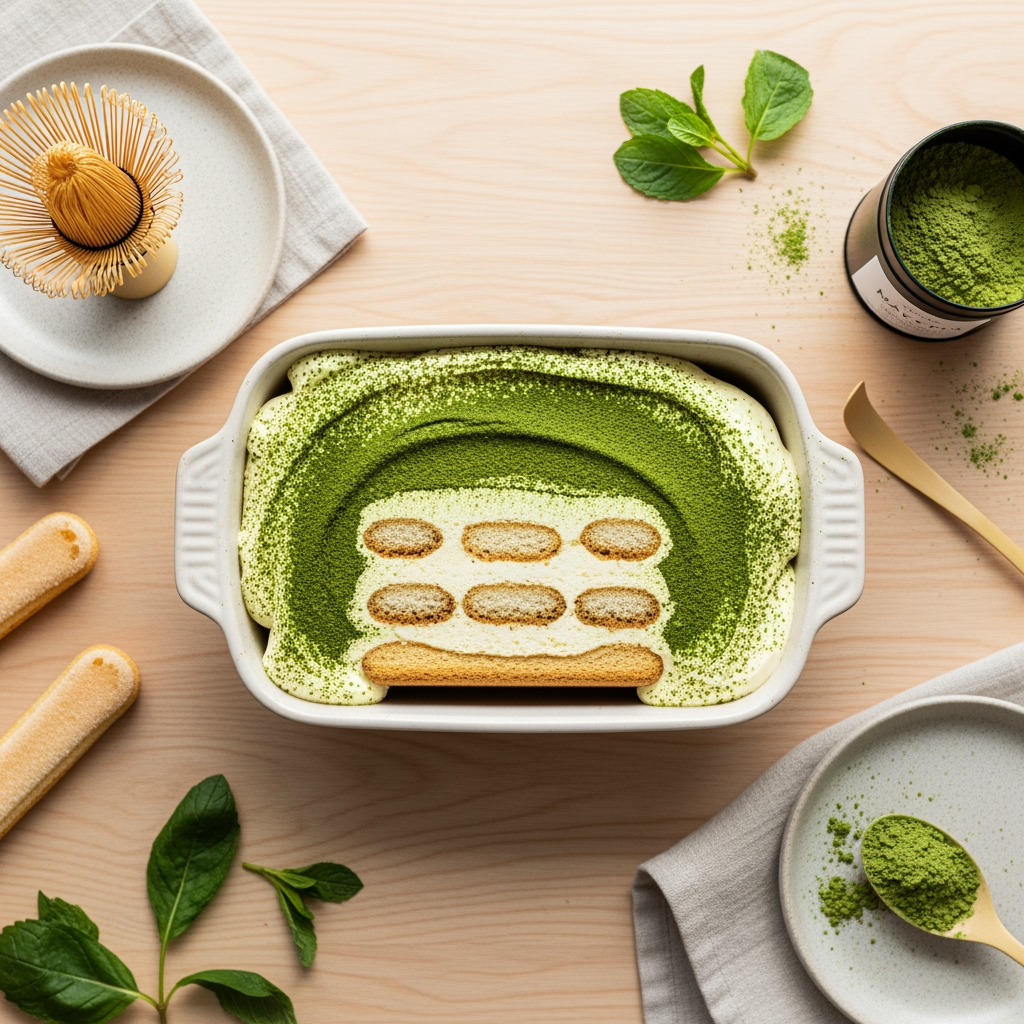
The matcha also adds something espresso can't: color. A proper matcha tiramisu is pale green through the cream layer, with a vibrant emerald dusting on top. It looks like nothing else on a dessert table.
From a flavor perspective, matcha's grassy, umami notes pair well with dairy fat. The same reason matcha lattes work — whole milk or oat milk rounding out the tea's edges — applies here, amplified by mascarpone's higher fat content and silkier texture.
Ingredients
Serves 6–8 | Prep time: 25 minutes | Chill time: 6+ hours (overnight recommended)
For the matcha soak:
- 2 tablespoons (12g) culinary-grade matcha powder
- 1 cup (240ml) hot water (175°F / 80°C — hot but not boiling)
- 2 tablespoons granulated sugar
For the mascarpone cream:
- 4 large egg yolks (pasteurized recommended if serving without cooking)
- ½ cup (100g) granulated sugar
- 16 ounces (450g) mascarpone cheese, cold
- 1½ cups (360ml) heavy whipping cream, cold
- 1½ tablespoons (9g) culinary-grade matcha powder
- 1 teaspoon vanilla extract
For assembly:
- ~36 savoiardi (Italian ladyfinger biscuits) — enough for two full layers in an 8×8-inch dish
- 2 tablespoons matcha powder for dusting the top
Step-by-Step Instructions
1. Prepare the matcha soak
Sift the matcha into a shallow bowl to break up clumps. Add the hot water (175°F — if you don't have a thermometer, let boiling water sit 2 minutes) and whisk until fully dissolved — a bamboo chasen works best, but a small metal whisk or fork is fine. Stir in the sugar until dissolved. Let cool to room temperature. You want a bowl wide enough to dip ladyfingers horizontally.
2. Make the mascarpone cream
In a large bowl, whisk the egg yolks and sugar until thick and pale — about 2–3 minutes by hand, or 1 minute with an electric mixer. Add the mascarpone and beat on low speed until just combined; overbeating can cause mascarpone to separate. In a separate bowl, whip the heavy cream to soft peaks. Sift the 1½ tablespoons matcha over the mascarpone mixture, add the vanilla, and fold together. Then fold in the whipped cream in two additions, gently, until no white streaks remain. The final cream should be pale green and hold soft peaks.
3. Assemble the first layer
One at a time, dip each ladyfinger into the matcha soak — about 2 seconds per side. You want them saturated but not disintegrating. Line the bottom of an 8×8-inch (or similar) dish with a single, tight layer of soaked ladyfingers. Spread half the mascarpone cream evenly over the top.
4. Build the second layer
Dip and arrange a second layer of ladyfingers on top of the cream. Spread the remaining mascarpone cream over them, smoothing the surface with a spatula.
5. Dust and chill
Using a fine-mesh sieve, generously dust the top with matcha powder. For the brightest green finish, add a final light dusting right before serving, since matcha naturally darkens as it absorbs moisture in the refrigerator. Cover tightly with plastic wrap and refrigerate for at least 6 hours, but genuinely: overnight is better. The ladyfingers need time to soften, and the matcha flavor deepens as it sits.
The overnight chill isn't just convenience — it's the step that transforms layered ingredients into tiramisu. Skip it and you'll have dry biscuits in cream. Wait 12–24 hours and you'll have something cohesive.
Matcha Tip: Choosing the Right Grade
This recipe calls for culinary-grade matcha, and there's a reason. Ceremonial-grade matcha — the kind typically prepared for drinking — has a more delicate flavor profile that can become less noticeable once combined with dairy and sugar. Culinary-grade matcha is generally preferred for desserts because its stronger flavor and deeper color hold up better during mixing and chilling. That said, if all you have is ceremonial-grade, it'll still work — just expect a milder matcha presence and plan to use slightly more for the dusting.
For the dusting in particular, sift the matcha through a fine-mesh strainer from at least 6 inches above the dish. This prevents clumps and creates that flawless green surface.
Serving and Storage
Serve matcha tiramisu cold, straight from the fridge. A sharp knife (wiped clean between cuts) gives the cleanest slices, but a large spoon and a casual approach works just as well — this isn't a fussy dessert.
Leftovers keep for up to 3 days covered in the refrigerator. The matcha dusting will darken slightly as it absorbs moisture from the cream — it still tastes the same, but if you're serving guests on day two, a fresh dusting on top before bringing it to the table is a nice touch. Don't freeze it; mascarpone doesn't thaw gracefully.
If you're looking for a quality matcha for this recipe, our 3.53oz culinary tin is a practical option — it's the right grade for baking and large enough for multiple batches.
References
- Komes D, Horžić D, Belščak A, Ganić KK, Vulić I. Green tea preparation and its influence on the content of bioactive compounds. Food Research International. 2010;43(1):167–176.
- Kochman J, Jakubczyk K, Antoniewicz J, Mruk H, Janda K. Health benefits and chemical composition of matcha green tea: a review. Molecules. 2021;26(1):85. PMID: 33375458
- Unno K, Furushima D, Hamamoto S, et al. Stress-reducing effect of matcha green tea with high theanine content compared to other green teas. Nutrients. 2019;11(7):1669. PMID: 31330875

Written by Nippon Matcha