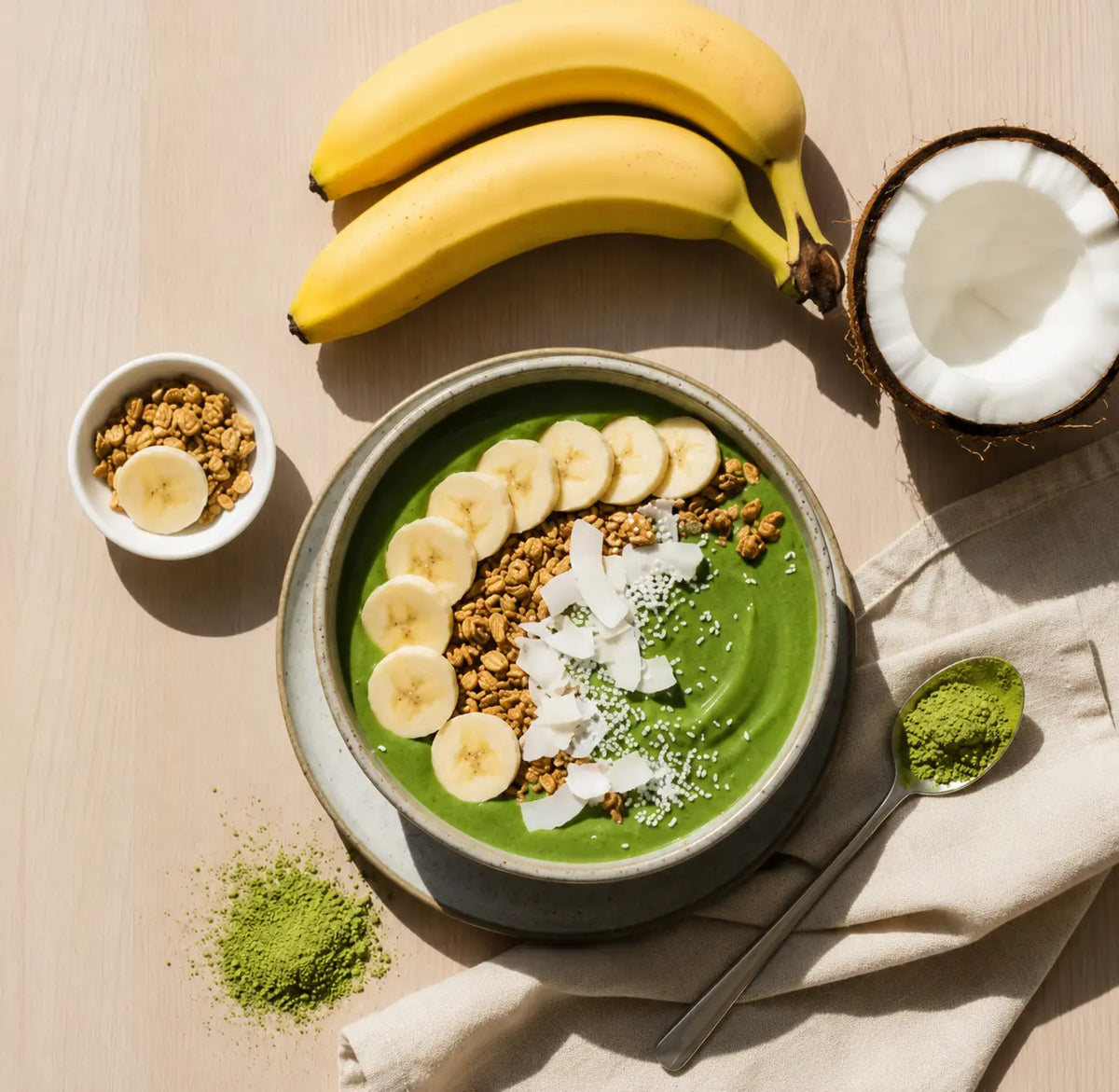
Matcha Smoothie Bowl with Banana and Coconut
Key Takeaways
- A matcha smoothie bowl comes together in under 10 minutes with just a blender and a handful of staples.
- Frozen banana is the backbone — it creates the thick, creamy texture without added dairy or ice cream.
- Matcha adds a gentle caffeine lift (~35 mg per serving) that pairs well with the natural sugars from fruit for sustained morning energy.
- Toppings aren't just for looks — coconut flakes, granola, and fresh fruit add texture contrast and turn this into a genuinely filling breakfast.
A smoothie bowl is what happens when a smoothie decides it wants to be a meal. Thick enough to eat with a spoon, topped with enough crunch to keep each bite interesting, and — with the right ingredients — substantial enough to carry you through to lunch without a mid-morning crash.
This version leans on two ingredients that work surprisingly well together: banana for body and natural sweetness, and matcha for depth and a gentle caffeine lift. The coconut ties them together, rounding out the flavor without overpowering the matcha.
It's a 10-minute breakfast that looks like you put in way more effort than you actually did. Here's how to make it.
Why This Combination Works
Bananas and matcha might not seem like obvious partners. One is tropical and sweet; the other is grassy, slightly bitter, and unmistakably Japanese. But frozen banana does something useful here: its natural sugars soften matcha's edge without burying it. The result is a bowl that tastes distinctly of matcha — not just "green" — without needing a spoonful of honey or syrup to balance things out.
Coconut plays a supporting role in two forms. Coconut milk in the base keeps the mixture dairy-free while adding the fat needed for a smooth, velvety texture (and helping with the absorption of matcha's fat-soluble catechins). Toasted coconut flakes on top contribute crunch and a subtle nuttiness that plays well with the earthy notes in the tea.
From a texture standpoint, frozen banana is the workhorse here. When blended with just enough liquid, it transforms into something remarkably close to soft-serve — thick, creamy, and scoopable. No frozen yogurt required.
Ingredients
Makes 1 generous bowl
- 2 large ripe bananas, sliced and frozen solid (at least 4 hours, preferably overnight)
- 1½ teaspoons ceremonial-grade matcha powder (about 3g)
- ⅓ cup full-fat coconut milk (canned, shaken well)
- 1–2 tablespoons unsweetened almond milk (as needed for blending)
- ½ teaspoon vanilla extract
- Pinch of fine sea salt
Toppings (suggested):
- Toasted coconut flakes or chips
- Fresh banana slices
- Granola (preferably low-sugar)
- Chia seeds or hemp hearts
- A light dusting of matcha powder
Instructions
- Prep the bananas. Peel ripe bananas (the more spotted, the sweeter), slice into coins, and freeze on a parchment-lined tray for at least 4 hours. Don't skip the tray step — freezing them loose prevents a solid banana block that your blender will struggle with.
- Sift the matcha. In a small bowl, sift 1½ teaspoons of matcha through a fine-mesh strainer. This is the step most people skip, and it's the difference between a silky bowl and one with bitter green clumps. If you don't have a strainer, use the back of a spoon to press out any lumps before adding liquid.
- Blend the base. Add frozen banana slices, sifted matcha, coconut milk, vanilla, and salt to a high-speed blender. Start with the coconut milk only — hold the almond milk for now. Blend on low, gradually increasing speed. Use the tamper if your blender has one; if not, stop and scrape down the sides as needed. The mixture should be thick and moving slowly.
- Adjust consistency. Add almond milk one tablespoon at a time — only if the blender is struggling. You want the final texture to be thicker than a drinkable smoothie; it should mound slightly when spooned. Aim for the consistency of soft-serve ice cream.
- Assemble immediately. Scoop into a wide, shallow bowl (cold if possible — pop it in the freezer for 5 minutes while blending). Smooth the surface with the back of a spoon, then arrange toppings in rows or clusters. A dusting of matcha powder on top adds a final visual touch.
- Eat right away. Smoothie bowls don't wait. The texture is at its peak in the first 5 minutes.
The Matcha Tip: Sift Every Time
Matcha is a fine powder, but it clumps — especially in humid environments or after the tin has been opened for a few weeks. Sifting matcha before adding it to any cold preparation is the single highest-impact step you can take. It takes 15 seconds and eliminates the chalky, bitter pockets that happen when clumps don't fully incorporate.
This matters more in cold recipes than hot ones. Heat helps dissolve matcha; cold liquid doesn't, so any clumps that go into the blender will likely survive the blend. If you're only going to sift for one type of recipe, sift for your smoothie bowls.
Customize Your Bowl
This base recipe is intentionally simple. A few ways to adjust it:
- More protein: Add a scoop of unflavored or vanilla protein powder before blending. Increase the almond milk slightly if the texture gets too stiff.
- Greens boost: A handful of baby spinach blends in invisibly — the matcha color covers it, and the banana sweetness masks the flavor. Add 5–10 calories and a meaningful nutrition bump.
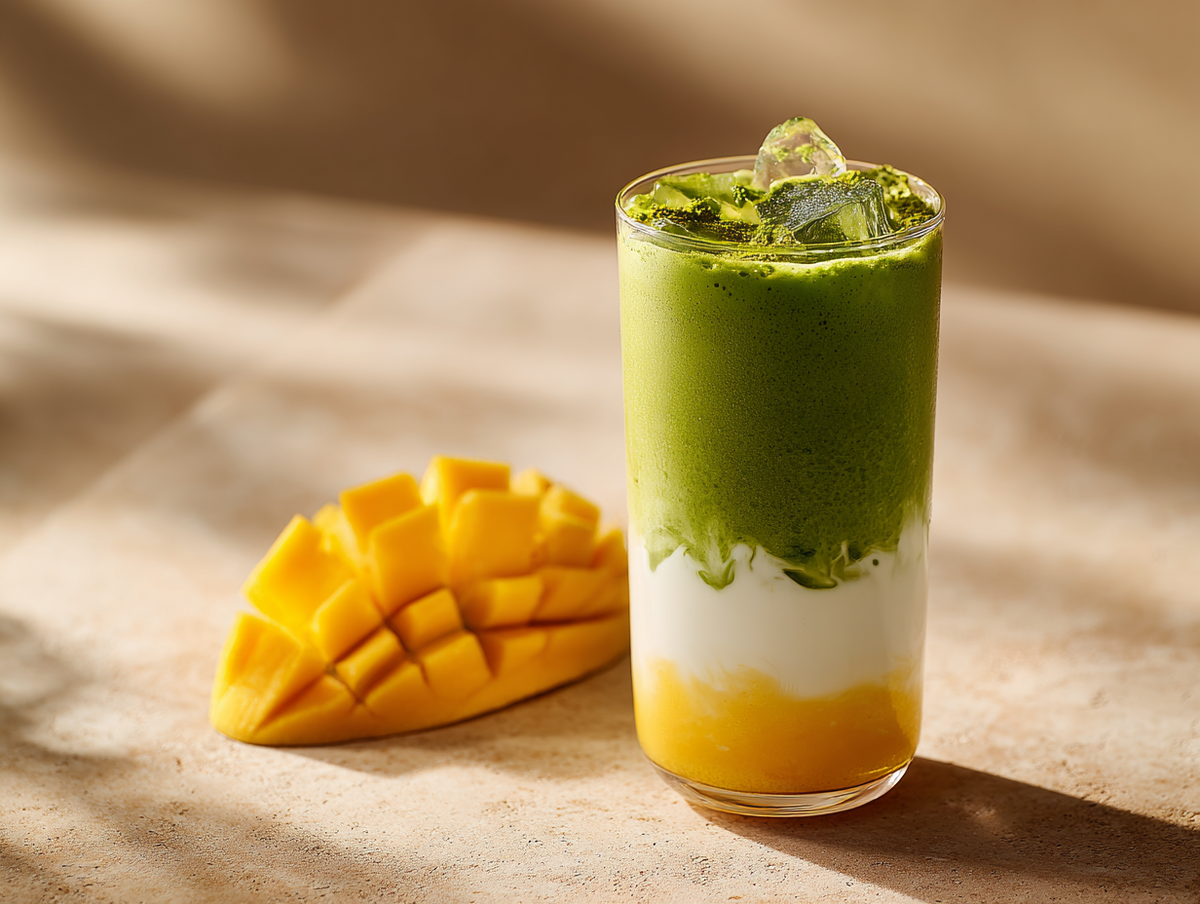
- Tropical twist: Swap half the banana for frozen mango or pineapple. The result is brighter, slightly tangier, and still works with the matcha.
- Nutty depth: A tablespoon of almond butter or cashew butter blended into the base adds richness and keeps you full longer.
A Note About Quality
Matcha quality matters — and it's especially noticeable in cold, uncooked recipes. There's nowhere to hide. If a matcha tastes bitter or dull when whisked with hot water, blending it with frozen banana won't rescue it; it'll just be bitter and dull in a smoothie bowl.
For recipes like this, you want a matcha that's bright, smooth, and balanced on its own. Ceremonial-grade matcha — stone-ground from shade-grown tencha leaves — is the standard for drinking straight, and it translates well to cold preparations where the flavor is front and center.
If you're looking for a ceremonial-grade matcha that works as well in a smoothie bowl as it does in a traditional bowl of tea, our 1.06oz tin is a good starting point. One tin yields roughly 15 smoothie bowls at the recipe's measurement — about $2 per bowl.
These statements have not been evaluated by the FDA. This product is not intended to diagnose, treat, cure, or prevent any disease.
References
- Kochman J, Jakubczyk K, Antoniewicz J, Mruk H, Janda K. Health Benefits and Chemical Composition of Matcha Green Tea: A Review. Molecules. 2021;26(1):85. PubMed
- Unno K, Furushima D, Hamamoto S, et al. Stress-Reducing Function of Matcha Green Tea in Animal Experiments and Clinical Trials. Nutrients. 2018;10(10):1468. PubMed
- Dietz C, Dekker M, Piqueras-Fiszman B. An Intervention Study on the Effect of Matcha Tea, in Drink and Snack Bar Formats, on Mood and Cognitive Performance. Food Res Int. 2017;99(Pt 1):72-78. PubMed

Written by Nippon Matcha