
Article: Matcha Energy Balls Recipe (No-Bake, 10 Minutes)
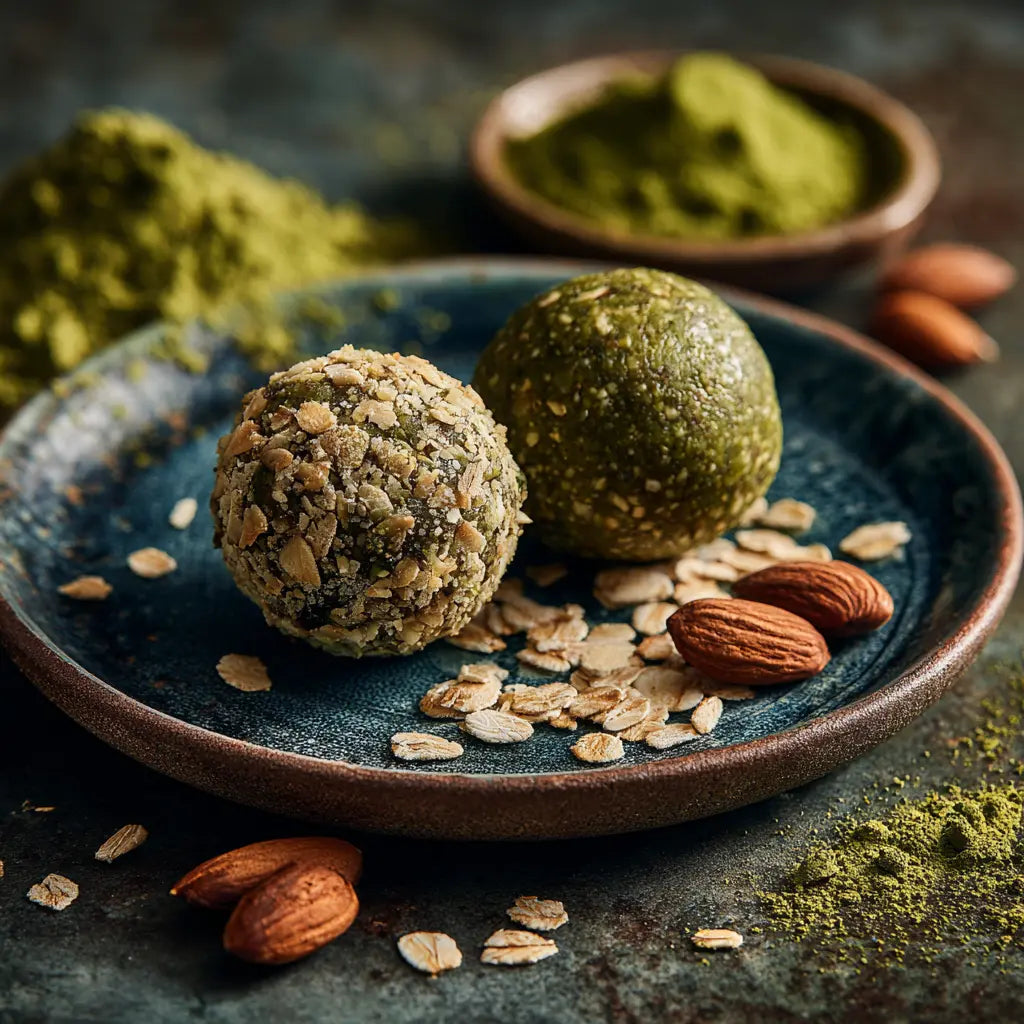
Matcha Energy Balls Recipe (No-Bake, 10 Minutes)
Key Takeaways
- No-bake, 6-ingredient recipe ready in 10 minutes — no special equipment needed
- Matcha adds caffeine (~35mg per ball at this recipe's yield) and L-theanine for a smoother energy curve compared to coffee
- Dates and almond butter provide natural sweetness and binding without refined sugar
- Keeps for a week refrigerated or up to 3 months frozen — perfect for batch prep
- Customizable: swap nut butters, add chocolate chips, or roll in different coatings
You need a snack that doesn't require turning on the oven, won't leave you crashing 45 minutes later, and actually tastes like something you'd look forward to eating. Matcha energy balls check all three boxes — and they take roughly 10 minutes from start to finish.
The matcha does more than turn them green. A 2g serving (about 1 teaspoon) of matcha delivers roughly 70mg of caffeine alongside 40–50mg of L-theanine — a combination that provides a steadier, less jittery energy lift than coffee alone [1]. In an energy ball, that caffeine hit is buffered by fiber, healthy fats, and natural sugars, creating a snack that sustains rather than spikes.
What You'll Need
Makes 12 balls. A food processor helps but isn't essential — a sturdy fork and some elbow grease will get the job done.
Dry ingredients:
- 1 cup rolled oats (120g)
- ½ cup unsweetened shredded coconut (40g)
- 1 tablespoon matcha powder (about 6g / 3 teaspoons) — enough for a clear matcha flavor without bitterness
- Pinch of sea salt
Wet ingredients:
- 1 cup Medjool dates, pitted (about 10–12, or 150g) — soak in warm water for 5 minutes if they're dry
- ¼ cup almond butter (60g) — substitute cashew or sunflower butter if needed
- 1 teaspoon vanilla extract
Optional coating:
- Extra shredded coconut, sesame seeds, or finely chopped pistachios for rolling
How to Make Them
Step 1: Pulse the dry ingredients (30 seconds)
Toss the oats, coconut, matcha powder, and salt into a food processor. Pulse 5–6 times until the oats break into a coarse meal — you want some texture, not flour.
Step 2: Add wet ingredients (30 seconds)
Add the pitted dates, almond butter, and vanilla. Process for 20–30 seconds until the mixture comes together. It should look like a sticky, uniform dough that holds its shape when pressed between your fingers. If it's too dry, add a teaspoon of water at a time. If too wet, add a tablespoon of oats.
Step 3: Roll the balls (5 minutes)
Scoop out roughly 1 tablespoon of mixture per ball. Roll between your palms into spheres about the size of a golf ball. If the mixture sticks to your hands, lightly wet them first — it helps more than you'd expect.
Step 4: Coat and chill (2 minutes + 15 minutes rest)
Roll each ball in your coating of choice — shredded coconut is the classic, but sesame seeds add a nice savory contrast. Place them on a parchment-lined plate or tray and refrigerate for at least 15 minutes to firm up.
The Matcha Tip
Use more matcha than you think you need. Most energy ball recipes call for 1 teaspoon of matcha and produce a barely-there green tint with no discernible flavor. Three teaspoons (about 6g) gives you a visible color, a distinct earthy note that plays well against the sweet dates, and roughly 35mg of caffeine per ball if you're making 12. That's about a third of an espresso shot — enough to notice, not enough to overdo.
If you're serving these to people who are matcha-skeptical, start with 2 teaspoons and work up. The salt in the recipe helps suppress any bitterness, so don't skip it even if it seems unnecessary.
Why This Works (Nutritionally)
Each ball lands around 130–140 calories, with roughly 4g of fiber from the oats and dates, 5g of healthy fats from the almond butter and coconut, and 3g of protein. The dates provide natural sugars that absorb more gradually than refined sugar because of the fiber matrix they're embedded in [2].
The matcha contributes catechins — particularly EGCG — which some studies suggest may modestly support metabolic rate during exercise, though the effect size is small and the evidence is mixed [3]. The more practical benefit here is the caffeine–L-theanine synergy: L-theanine has been shown to promote alpha brainwave activity associated with a relaxed but alert state, which may help smooth out caffeine's sharper edges [1].
Variations
Chocolate matcha: Add 1 tablespoon cocoa powder to the dry mix. Replace coconut coating with cocoa powder for a double-chocolate effect.
Protein boost: Add 2 tablespoons of vanilla or unflavored protein powder. You may need an extra teaspoon of water since protein powder absorbs moisture.
Nut-free: Swap almond butter for sunflower seed butter and replace shredded coconut coating with hemp seeds.
Crunch factor: Add 2 tablespoons of cacao nibs or chopped almonds after processing — pulse once or twice just to distribute.
Storage
Refrigerate in an airtight container with parchment between layers. They'll keep for up to a week, though the matcha color will fade slightly after day 3 — still perfectly fine to eat. For longer storage, freeze them on a tray until solid, then transfer to a freezer bag — good for up to 3 months. They're edible straight from the freezer after about 5 minutes at room temperature.
These are exactly the kind of snack that makes sense to batch on Sunday for the week ahead. If you're looking to try matcha in recipes beyond lattes, our 1.06oz ceremonial-grade tin is a good starting point — it's fine enough to dissolve smoothly in both drinks and dough.
The research above reflects findings from independent clinical trials, not claims about any specific product. These statements have not been evaluated by the FDA. This product is not intended to diagnose, treat, cure, or prevent any disease.
References
- Nobre AC, Rao A, Owen GN. L-theanine, a natural constituent in tea, and its effect on mental state. Asia Pacific Journal of Clinical Nutrition. 2008;17(S1):167–168. PMID: 18296328
- Al-Farsi MA, Lee CY. Nutritional and functional properties of dates: a review. Critical Reviews in Food Science and Nutrition. 2008;48(10):877–887. PMID: 18949591
- Hursel R, Viechtbauer W, Westerterp-Plantenga MS. The effects of green tea on weight loss and weight maintenance: a meta-analysis. International Journal of Obesity. 2009;33(9):956–961. PMID: 19597519

Written by Nippon Matcha
%20and%20L-theanine%20for%20a%20smoother%20energy%20cur...)