
Matcha vs Yerba Mate: Caffeine, Nutrients, and How They Compare
Key Takeaways
- Different plants, different compounds. Matcha comes from Camellia sinensis (the tea plant) and is rich in catechins like EGCG and the amino acid L-theanine. Yerba mate comes from Ilex paraguariensis (a South American holly) and its primary antioxidants are chlorogenic and caffeoylquinic acids.
- Similar caffeine, different experiences. Both deliver roughly 30–70 mg of caffeine per serving, but matcha's L-theanine may promote calmer focus while yerba mate's theobromine and higher caffeine extraction can feel more stimulating.
- Antioxidant profiles don't overlap much. Matcha provides catechins (especially EGCG); yerba mate provides caffeoylquinic acids. Both show antioxidant activity in lab tests, but through entirely different compound classes.
- Neither is "healthier." The research suggests they serve different purposes — matcha for calm alertness, yerba mate for sustained energy — and the best choice depends on what you're looking for.
Matcha and yerba mate are both caffeinated, antioxidant-rich beverages with centuries of cultural history behind them. That's about where the similarities end. One is a finely ground powder from a shade-grown tea plant in Japan; the other is an infusion of dried leaves from a South American holly. They contain different compounds, produce different subjective effects, and have entirely different research literatures backing their respective benefits.
Here's how they actually compare.
What Are Matcha and Yerba Mate?
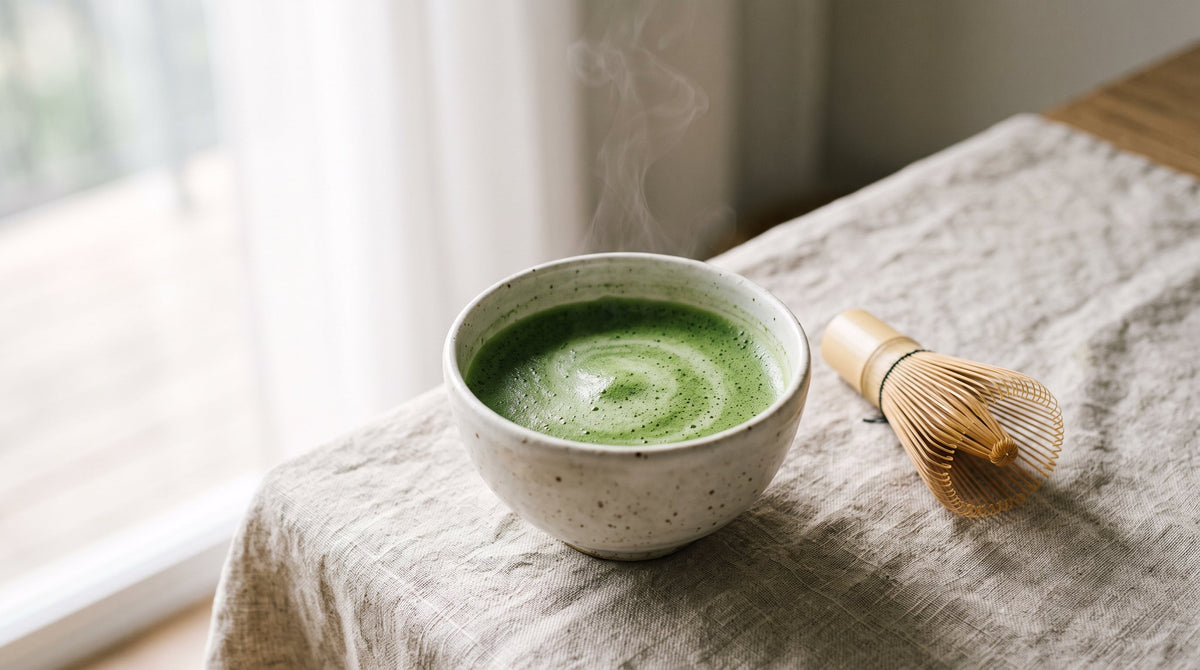
Matcha is made from Camellia sinensis, the same plant species as green, black, and oolong tea. The difference is in the cultivation: tea plants destined for matcha are shaded for roughly 20 days before harvest, which increases chlorophyll and amino acid content — particularly L-theanine. After harvesting, the leaves are steamed, dried, and stone-ground into a fine powder. When you drink matcha, you're consuming the entire leaf.[1]
Yerba mate comes from Ilex paraguariensis, a species of holly native to South America — primarily Argentina, Brazil, and Paraguay. The leaves are dried, sometimes roasted, and steeped in hot (not boiling) water, traditionally in a hollowed gourd and sipped through a metal bombilla. Unlike matcha, you're drinking an infusion — the leaves stay behind.[3]
These are not variations of the same plant. They're botanically unrelated, which explains why their chemical profiles look so different.
Caffeine: How Much and How It Feels
Both beverages are caffeinated, but the amount varies significantly depending on preparation.
A standard 2-gram serving of matcha (about 1 teaspoon) typically contains 30–70 mg of caffeine. The wide range reflects differences in cultivar, growing conditions, and how densely the powder is packed. Because you consume the whole leaf powder, the caffeine intake is consistent with what's in the leaf itself.
Yerba mate caffeine is harder to pin down because of how it's brewed. A single 8 oz cup of yerba mate may contain 30–85 mg of caffeine, but the traditional gourd-and-bombilla method involves repeatedly refilling with hot water over a long session. One comprehensive analysis found that a typical drinking session can extract 250–300 mg of caffeine in aggregate across multiple refills.[3] The caffeine in yerba mate is sometimes called "mateína" in marketing materials, but chemically it's the same compound as the caffeine in coffee or tea.
The experience differs, and the reason is companion compounds.
Matcha contains significant amounts of L-theanine, an amino acid nearly unique to tea. A 2021 systematic review found that the combination of L-theanine and caffeine consistently improves cognitive performance and subjective alertness in randomized controlled trials, with L-theanine appearing to modulate the jitteriness caffeine can cause.[4] A 12-week RCT by Baba et al. compared matcha capsules to caffeine capsules and placebo in middle-aged and older adults under mild stress. The matcha group showed improvements in attention and work performance that the caffeine-only group did not, suggesting compounds beyond caffeine — likely L-theanine and possibly catechins — contribute to matcha's cognitive effects.[1]
Yerba mate does not contain meaningful amounts of L-theanine. Instead, its companion compounds are theobromine (also found in cocoa) and theophylline, both methylxanthines like caffeine but with subtly different pharmacological profiles. Theobromine is a vasodilator and may contribute to the smooth, sustained energy users report from mate, though direct clinical trials on mate's subjective effects are limited.[3]
Matcha may be the better choice for focused work; yerba mate tends to deliver a more straightforward stimulant effect. But individual responses vary, and there's no head-to-head trial comparing them directly.
Antioxidants: Different Compounds, Similar Capacity
Both matcha and yerba mate score well on antioxidant assays, but for different reasons.
Matcha's primary antioxidants are catechins — particularly epigallocatechin gallate (EGCG). Because matcha is shade-grown and consumed as whole-leaf powder, it provides a higher concentration of catechins per serving than steeped green tea. EGCG has been extensively studied in cell and animal models for its antioxidant and anti-inflammatory properties, though human clinical evidence remains modest for most outcomes.[2]
Yerba mate's antioxidant compounds are primarily caffeoylquinic acids (CQAs) — including chlorogenic acid, neochlorogenic acid, and dicaffeoylquinic acid. A 2024 comparative analysis found that yerba mate had the highest total CQA content among several herbal infusions tested, at approximately 108 mg per gram of dry leaf weight.[2] A 2022 study of yerba mate samples from Paraguay, Argentina, and Brazil confirmed that chlorogenic acid and its derivatives are the dominant phenolic compounds, with Brazilian samples showing the highest antioxidant activity in lab assays.[3]
Some sources claim yerba mate has "more antioxidants than green tea," but this oversimplifies the picture. Total antioxidant capacity depends on the assay used (ORAC, DPPH, FRAP), the brewing method, and the specific product. The two beverages have different antioxidant profiles, not necessarily better or worse ones. Comparing ORAC scores across studies is unreliable unless the assays were run under identical conditions on the same samples.
Matcha gives you catechins (especially EGCG); yerba mate gives you caffeoylquinic acids. Both show antioxidant activity, but through entirely different chemical pathways — so "which has more antioxidants" isn't the right question.
L-Theanine vs. Theobromine: The Real Differentiator
If there's one compound that separates these two beverages most clearly, it's L-theanine.
Matcha is one of the richest dietary sources of L-theanine, thanks to the shading process that boosts amino acid content in the tea leaves. L-theanine crosses the blood-brain barrier and is thought to increase alpha brain wave activity, which is associated with a state of relaxed alertness. Multiple RCTs have shown that L-theanine combined with caffeine improves attention, reaction time, and mental focus compared to caffeine alone.[4]
Yerba mate contains essentially no L-theanine. What it does contain is theobromine — a methylxanthine that dilates blood vessels and may have a mild relaxing effect on smooth muscle. Theobromine's stimulant effect is gentler than caffeine's, and it's the same compound that gives dark chocolate its reputation for improving mood. The combination of caffeine plus theobromine in yerba mate may explain why users report sustained energy without the sharp crash associated with coffee, though this hasn't been directly tested in controlled trials.
The practical translation: if you want calm focus, matcha's L-theanine + caffeine combo has stronger clinical backing. If you want sustained physical energy, yerba mate's caffeine + theobromine profile may serve you better — but the evidence here is more anecdotal than clinical.
Nutrient Comparison at a Glance
| Feature | Matcha (2g serving) | Yerba Mate (8 oz cup) |
|---|---|---|
| Plant source | Camellia sinensis | Ilex paraguariensis |
| Caffeine | 30–70 mg | 30–85 mg (up to 250+ mg in traditional session) |
| Key amino acid | L-theanine (abundant) | Negligible L-theanine |
| Other stimulants | Trace theophylline | Theobromine, theophylline |
| Primary antioxidants | Catechins (EGCG, EGC, ECG) | Caffeoylquinic acids (chlorogenic acid) |
| Preparation | Whisked powder consumed whole | Steeped leaves (infusion) |
| Taste profile | Umami, vegetal, slightly bitter | Earthy, smoky, slightly bitter |
Which Should You Choose?
There's no universal winner — it depends on what you're after.
Choose matcha if: you want focused, calm mental energy; you're interested in L-theanine's potential cognitive benefits; you prefer consuming whole-leaf antioxidants; or you enjoy a meditative preparation ritual.
Choose yerba mate if: you want a more coffee-like energy boost; you're looking for sustained alertness over a long work session; you prefer a social sipping experience; or you're curious about South American tradition.
Both are reasonable alternatives to coffee for people looking to moderate their caffeine intake or explore different functional beverages. Neither will replace a good sleep schedule, a balanced diet, or actual medical advice for anything that ails you.
If you're looking to try ceremonial-grade matcha, our 1.06oz starter tin is a good place to start — it's enough for about 15 servings, which gives you a fair sense of how matcha feels compared to your current routine.
The research above reflects findings from independent clinical trials, not claims about any specific product.
These statements have not been evaluated by the FDA. This product is not intended to diagnose, treat, cure, or prevent any disease.
References
- Baba Y, Inagaki S, Nakagawa S, et al. Effects of daily matcha and caffeine intake on mild acute psychological stress-related cognitive function in middle-aged and older adults: a randomized placebo-controlled study. Nutrients. 2021;13(5):1700. doi:10.3390/nu13051700
- Khaksar G, et al. Caffeoylquinic acid profiling: comparative analysis in yerba mate, Indian camphorweed, and stevia extracts with emphasis on the influence of brewing conditions and cold storage in yerba mate infusion. PeerJ. 2024;12:e17250. doi:10.7717/peerj.17250
- Rząsa-Duran E, Kryczyk-Poprawa A, Drabicki D, et al. Yerba mate as a source of elements and bioactive compounds with antioxidant activity. Antioxidants. 2022;11(2):371. doi:10.3390/antiox11020371
- Sohail A, Minhas S, Kalsoom O, et al. The cognitive-enhancing outcomes of caffeine and L-theanine: a systematic review. Cureus. 2021;13(11):e8288. doi:10.7759/cureus.8288

Written by Nippon Matcha
%20and%20is%20rich%20in%20catechins%20like%20EGCG%20and%20the%20amino%20acid%20L-theanine.%20Yerba%20mate%20comes%20from%20I...)