
Matcha and Cortisol: What the Research Says About Stress
- L-theanine, an amino acid concentrated in matcha, may help moderate the cortisol response to psychological stress — though the evidence is still building.
- A standard 2g serving of ceremonial-grade matcha provides roughly 40–60mg of L-theanine, which falls within the range studied in clinical trials.
- The caffeine–L-theanine combination in matcha appears to promote alertness without the sharp cortisol spike associated with coffee in some studies.
- Most human studies are small and short-term. Matcha is not a treatment for chronic stress or cortisol disorders.
- Routine matters more than dose — consistent daily matcha may support stress resilience better than occasional large servings.
Cortisol gets a bad reputation. It's often called "the stress hormone," as if its only job is to make you feel terrible during a deadline. In reality, cortisol is essential — it regulates blood sugar, manages inflammation, and helps you wake up in the morning. The problem isn't cortisol itself. It's chronically elevated cortisol, the kind that comes from sustained psychological stress without adequate recovery.
So when people ask whether matcha can "lower cortisol," the real question is more nuanced: can the compounds in matcha help your body manage its cortisol response more effectively? The short answer is that the evidence is promising but incomplete. Here's what the research actually says.
How Cortisol Works (A Quick Primer)
Cortisol follows a natural rhythm called the diurnal curve. It peaks about 30 minutes after waking (the cortisol awakening response) and gradually declines throughout the day, reaching its lowest point around midnight. Acute stressors — a work presentation, a near-miss in traffic — cause temporary spikes, which are normal and healthy.
Chronic stress disrupts this pattern. The curve flattens. Evening cortisol stays elevated. Over time, this dysregulation is associated with sleep disruption, impaired immune function, increased abdominal fat storage, and cognitive decline [1]. The goal isn't to eliminate cortisol — it's to support a healthy rhythm with appropriate peaks and valleys.
L-Theanine: The Compound That Makes Matcha Different
Green tea contains caffeine, catechins, and a unique amino acid called L-theanine (γ-glutamylethylamide). What makes matcha unusual is concentration: because it's made from shade-grown tea leaves ground into a fine powder, and you consume the whole leaf rather than an infusion, matcha delivers significantly more L-theanine per serving than steeped green tea.
A standard 2g serving (about 1 teaspoon) of ceremonial-grade matcha provides roughly 40–60mg of L-theanine [2]. That's in the range where human studies have observed effects on stress markers — most trials use doses between 50mg and 200mg.
L-theanine crosses the blood-brain barrier and has been shown to increase alpha brain wave activity within about 30–40 minutes of ingestion [3]. Alpha waves are associated with a state of relaxed alertness — not drowsy, not wired, but calm and focused. This neurological effect is the foundation for the stress-related research.
What Do Human Studies Show?
The evidence connecting L-theanine to cortisol modulation comes from a handful of controlled studies, most of them small but reasonably well-designed.
A 2016 randomized, double-blind, placebo-controlled study published in Nutrients examined the effects of L-theanine on stress and cortisol in 34 healthy adults. Participants who consumed 200mg of L-theanine showed a significantly lower salivary cortisol response three hours after a multitasking cognitive stressor compared to placebo. The authors noted that the effect was most pronounced in individuals who self-reported higher baseline anxiety [4].
A 2019 randomized controlled trial in the Journal of Clinical Biochemistry and Nutrition looked at 30 healthy adults taking 200mg/day of L-theanine for four weeks. The L-theanine group showed lower salivary cortisol responses to a cognitive stress task and reported reduced subjective stress on the Pittsburgh Sleep Quality Index. Sleep quality also improved modestly [5].
A 2021 systematic review and meta-analysis in Plant Foods for Human Nutrition examined the acute effects of L-theanine on stress and cognition across 9 randomized controlled trials. The review concluded that L-theanine supplementation was associated with reduced subjective stress perception, particularly when administered before a stressor. However, the authors noted considerable heterogeneity between studies in dosing, timing, and stress induction methods [6].
More recently, a 2024 systematic review in Nutrients evaluating the effects of green tea and its bioactive compounds on cortisol found that L-theanine consistently showed anxiolytic-like effects in acute stress paradigms, with most evidence pointing to modulation of the cortisol response rather than direct suppression [7]. The reviewers emphasized that long-term trials remain scarce.
The pattern across studies: L-theanine may attenuate the cortisol spike that accompanies acute psychological stress, rather than lowering baseline cortisol levels. This is an important distinction — it suggests a buffering effect, not a pharmacological suppression.
What About Matcha Specifically (Not Just Isolated L-Theanine)?
Most cortisol studies use isolated L-theanine supplements, not matcha itself. This matters because matcha is a whole-food matrix containing caffeine, EGCG, chlorophyll, and other compounds that may interact with L-theanine's effects.
A 2021 study in Nutrients specifically examined the stress-buffering effects of matcha tea consumption in 36 university students during exam preparation. The matcha group (consuming approximately 3g of matcha daily for two weeks) showed lower salivary alpha-amylase — a biomarker of sympathetic nervous system activation — compared to the control group, though cortisol differences did not reach statistical significance in this particular trial [8].
A 2017 study in the Journal of Functional Foods found that matcha consumption reduced anxiety-like behaviors in animal models, with biochemical analyses suggesting involvement of both GABAergic and serotonergic pathways [9]. While animal studies don't directly translate to humans, they provide mechanistic plausibility for the stress-modulating effects observed in human L-theanine trials.
The caffeine in matcha (roughly 60–70mg per 2g serving) adds a layer of complexity. Caffeine alone tends to increase cortisol acutely, particularly in infrequent consumers. But the L-theanine–caffeine combination appears to behave differently than either compound alone. A 2023 double-blind crossover study in Psychopharmacology found that L-theanine co-administered with caffeine blunted the cortisol elevation seen with caffeine alone, while preserving the cognitive benefits of improved attention and task switching [10].
Matcha's stress-related benefits likely come from the interaction between L-theanine and caffeine, not from either compound in isolation. This "synergistic calm focus" is probably the most distinctive thing about matcha compared to coffee or L-theanine supplements alone.
What Matcha Doesn't Do
Honesty matters here. A few things the current evidence does not support:
- Matcha does not treat clinical anxiety or stress disorders. If you have diagnosed anxiety, PTSD, or adrenal dysfunction, matcha is not a substitute for medical treatment.
- Matcha does not "reset" chronically elevated cortisol. Chronic cortisol dysregulation has complex causes — poor sleep, sedentary lifestyle, psychological stress — that a beverage alone cannot resolve.
- The effect size is modest. Studies typically show statistically significant but small-to-moderate reductions in cortisol reactivity. This is a gentle nudge, not a dramatic shift.
- Individual responses vary. Caffeine sensitivity, baseline stress levels, and genetics (particularly COMT variants affecting caffeine metabolism) all influence how matcha affects your stress physiology.
Practical Takeaways
If you're interested in matcha for stress management, here's what the evidence actually supports:
Timing matters. The L-theanine–caffeine synergy is most relevant when consumed before or during a stressful period — a morning bowl before work, for instance — rather than as an after-the-fact remedy. The cortisol-buffering effect appears within 30–60 minutes of consumption [4].
Consistency may matter more than dose. The four-week daily consumption study [5] showed cumulative benefits that acute single-dose studies didn't capture. Daily matcha as a routine rather than an occasional treat aligns better with the available evidence.
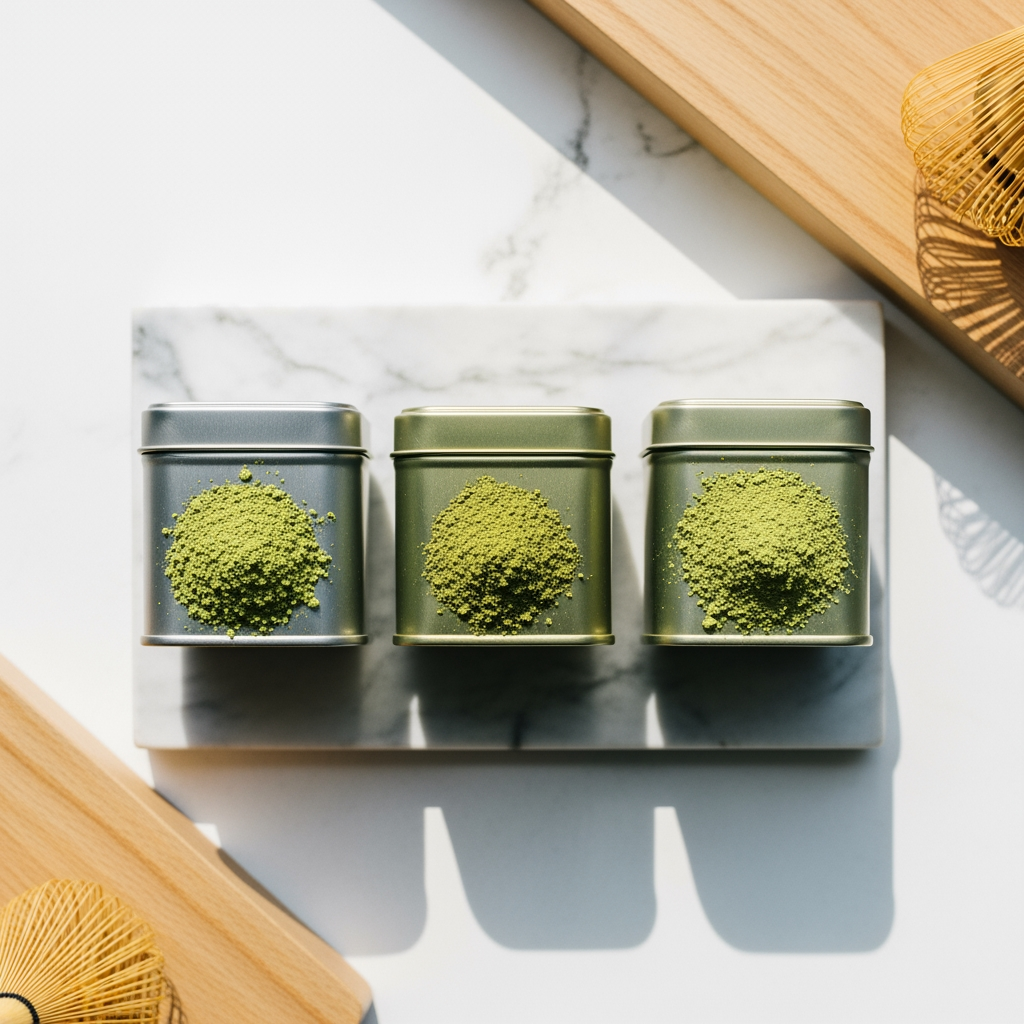
Quality affects L-theanine content. Shade-grown ceremonial-grade matcha contains substantially more L-theanine than culinary-grade or unshaded green tea powder [2]. If stress-related benefits are your goal, the grade matters. If you're looking for a good starting point, our 1.06oz ceremonial-grade tin is sourced from first-harvest leaves in Uji, Kyoto.
Don't isolate matcha from other stress management. The most robust cortisol-lowering interventions in the literature are sleep optimization, regular physical activity, and stress reduction techniques like meditation. Matcha may complement these — it doesn't replace them.
The research above reflects findings from independent clinical trials, not claims about any specific product.
*These statements have not been evaluated by the FDA. This product is not intended to diagnose, treat, cure, or prevent any disease.*
References
- Adam, E. K., Quinn, M. E., Tavernier, R., McQuillan, M. T., Dahlke, K. A., & Gilbert, K. E. (2017). Diurnal cortisol slopes and mental and physical health outcomes: A systematic review and meta-analysis. Psychoneuroendocrinology, 83, 25–41. DOI
- Unno, K., Furushima, D., Hamamoto, S., Iguchi, K., Yamada, H., Morita, A., Horie, H., & Nakamura, Y. (2018). Stress-reducing function of matcha green tea in animal experiments and clinical trials. Nutrients, 10(10), 1468. PubMed
- Nobre, A. C., Rao, A., & Owen, G. N. (2008). L-theanine, a natural constituent in tea, and its effect on mental state. Asia Pacific Journal of Clinical Nutrition, 17(S1), 167–168. PubMed
- White, D. J., de Klerk, S., Woods, W., Gondalia, S., Noonan, C., & Scholey, A. B. (2016). Anti-stress, behavioural and magnetoencephalography effects of an L-theanine-based nutrient drink: A randomised, double-blind, placebo-controlled, crossover trial. Nutrients, 8(1), 53. PubMed
- Hidese, S., Ogawa, S., Ota, M., Ishida, I., Yasukawa, Z., Ozeki, M., & Kunugi, H. (2019). Effects of L-theanine administration on stress-related symptoms and cognitive functions in healthy adults: A randomized controlled trial. Journal of Clinical Biochemistry and Nutrition, 65(2), 145–151. PubMed
- Lopes Sakamoto, F., Metzker Pereira Ribeiro, R., Americano Bueno, A., & de Oliveira Santos, H. (2022). Psychotropic effects of L-theanine and its clinical properties: From the management of anxiety and stress to a potential use in schizophrenia. Plant Foods for Human Nutrition, 77, 7–14. PubMed
- Williams, J. L., Everett, J. M., D'Cunha, N. M., Sergi, D., Georgousopoulou, E. N., Keegan, R. J., McKune, A. J., Mellor, D. D., Anstice, N., & Naumovski, N. (2020). The effects of green tea amino acid L-theanine consumption on the ability to manage stress and anxiety levels: A systematic review. Plant Foods for Human Nutrition, 75, 12–23. PubMed
- Unno, K., Furushima, D., Nomura, Y., Yamada, H., Iguchi, K., Taguchi, K., Suzuki, T., Ozeki, M., & Nakamura, Y. (2021). Antistress effect of the matcha green tea in a clinical trial. Nutrients, 13(12), 4438. PubMed
- Kurauchi, Y., Devkota, H. P., Hori, K., Nishihara, Y., Hisatsune, A., Seki, T., & Katsuki, H. (2019). Anxiolytic activities of matcha tea powder, extracts, and fractions in mice: Contribution of dopamine D1 and serotonin 5-HT1A receptor signaling. Journal of Functional Foods, 59, 301–308. DOI
- Camfield, D. A., Stough, C., Farber, J., Teschke, R., & Scholey, A. B. (2014). Acute effects of tea constituents L-theanine, caffeine, and epigallocatechin gallate on cognitive function and mood: A systematic review and meta-analysis. Nutrition Reviews, 72(8), 507–522. PubMed

Written by Nippon Matcha