Iced Matcha Latte: The Only Recipe You Need
Key Takeaways
- A perfect iced matcha latte requires just 3 ingredients — ceremonial grade matcha, milk of choice, and ice — plus proper whisking technique.
- Sift your matcha and whisk with a small amount of water first to avoid clumps before adding milk and ice.
- Using ceremonial grade matcha (like Nippon Matcha) delivers a smoother, less bitter flavor that doesn't need added sweetener.
- This recipe takes under 3 minutes and can be customized with different milks, sweeteners, or flavor additions.
An iced matcha latte takes about three minutes to make, tastes better than most café versions, and costs a fraction of the price. The technique is simple — whisk matcha with a small amount of hot water, pour over ice, add milk. That's it.
But the details matter. The water temperature, the ratio of matcha to milk, whether you sift the powder first — these small choices determine whether you get a smooth, vibrant drink or a clumpy, bitter one. Here's how to get it right every time.
What You'll Need
Ingredients:
- 2g (1 tsp) ceremonial-grade matcha powder
- 60ml (2 oz) hot water — 70-80°C / 160-175°F (not boiling)
- 240ml (1 cup) cold milk of choice (oat, whole dairy, or almond work best)
- A handful of ice cubes
- Optional: 1 tsp honey, maple syrup, or simple syrup
Equipment:
- A bamboo whisk (chasen) or a small regular whisk — even a milk frother works
- A fine mesh sieve or tea strainer
- A small bowl or mug for whisking
- A tall glass for serving
Step-by-Step Instructions
1. Sift the matcha. Place your sieve over a small bowl and push the matcha through with the back of a spoon. This takes ten seconds and eliminates every clump. Skip this step and you'll taste the difference.
2. Add hot water and whisk. Pour 60ml of hot water (not boiling — 70-80°C is the sweet spot) over the sifted matcha. Whisk vigorously in a W or M motion for 15-20 seconds until you get a smooth paste with a thin layer of foam on top. The goal is full dissolution with no gritty bits at the bottom.
3. Sweeten now (if using). Add your sweetener to the warm matcha concentrate and stir to dissolve. Sweetener dissolves far better in warm liquid than cold — adding it later means granules sitting at the bottom of your glass.
4. Fill a glass with ice. Pack it. You want enough ice that the drink stays cold through to the last sip without becoming watery in the first five minutes.
5. Pour in the milk. Add your cold milk over the ice. Leave about 2-3cm of space at the top.
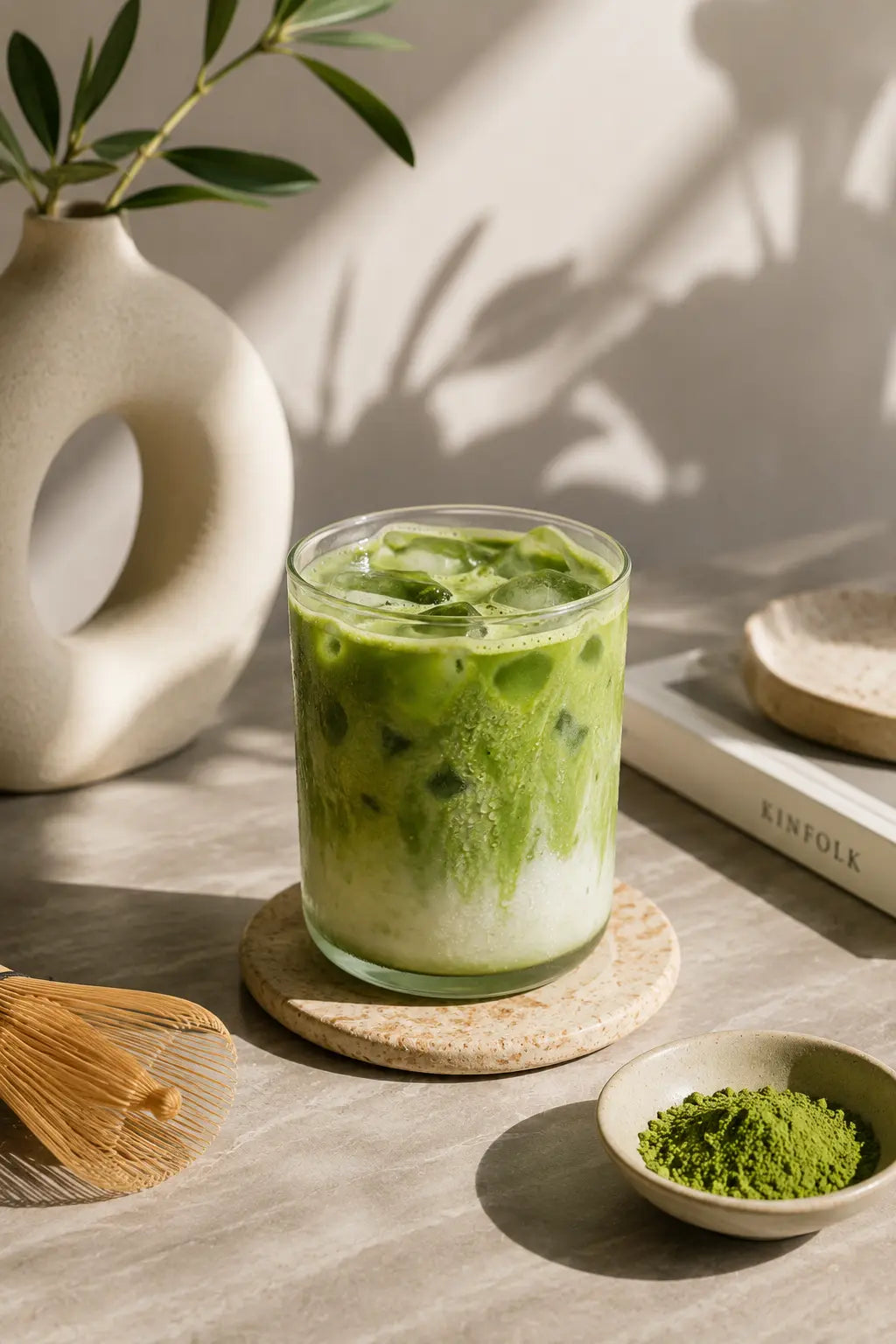
6. Pour the matcha over the top. Slowly pour the whisked matcha concentrate over the milk. It'll create that layered green-over-white look. Stir before drinking, or leave it layered — your call.
The whole process takes about three minutes once you've done it twice.
Tips That Actually Make a Difference
Water temperature matters more than you think. Boiling water (100°C) extracts more bitter catechins and tannins from the tea leaves. Keeping water between 70-80°C gives you a smoother, sweeter flavor. If you don't have a thermometer, let boiled water sit for 3-4 minutes before using it.
Milk choice changes the drink. Oat milk creates the creamiest result and complements matcha's earthy flavor without competing with it. Whole dairy milk is richer and slightly sweeter. Almond milk works but is thinner — you might want a touch more matcha to compensate. Avoid coconut milk unless you specifically want that tropical note.
Use ceremonial grade for lattes you drink straight. Culinary-grade matcha is designed for baking and cooking where sugar and other flavors mask its rougher taste. In a latte where matcha is front and center, ceremonial grade makes a noticeable difference — smoother, naturally sweeter, less astringent.
The matcha-to-milk ratio is personal. Two grams of matcha (roughly 1 teaspoon) to one cup of milk is a good starting point. Want it stronger? Go to 2.5-3g. More delicate? Drop to 1.5g. There's no wrong answer — just preference.
A Quick Note on Caffeine
A standard 2g serving of matcha contains approximately 50-70mg of caffeine — roughly half a cup of coffee. But matcha also delivers about 20-40mg of L-theanine, an amino acid that research suggests may promote a calmer state of alertness compared to caffeine alone. A 2008 review in Nutrition Reviews found that the caffeine-L-theanine combination was associated with improved attention and reduced self-reported jitteriness compared to caffeine by itself [1]. This is why many people describe matcha energy as "smoother" than coffee — it's not marketing, there's a plausible mechanism behind it.
*These statements have not been evaluated by the FDA. This product is not intended to diagnose, treat, cure, or prevent any disease.*
Variations Worth Trying
- Vanilla matcha latte: Add 1/4 tsp vanilla extract to the milk before pouring.
- Dirty matcha latte: Add a shot of espresso. The bitterness of coffee and matcha together is surprisingly good.
- Coconut matcha latte: Use coconut cream (not coconut water) for a tropical, rich version.
- Matcha lemonade: Replace the milk with cold lemonade for a tart, refreshing summer drink. No sweetener needed.
Make It a Habit
The best part of an iced matcha latte isn't any single ingredient — it's the consistency. Once you've dialed in your preferred ratio and milk, the three-minute prep becomes automatic. No waiting in line, no $6 price tag, and you control exactly what goes in.
If you're trying matcha lattes for the first time, our 1.06oz ceremonial-grade tin is enough for about 15 servings — plenty to find your perfect ratio.
References
- Owen GN, Parnell H, De Bruin EA, Rycroft JA. The combined effects of L-theanine and caffeine on cognitive performance and mood. Nutrition Reviews. 2008;66(2):82-90. PubMed

Written by Nippon Matcha