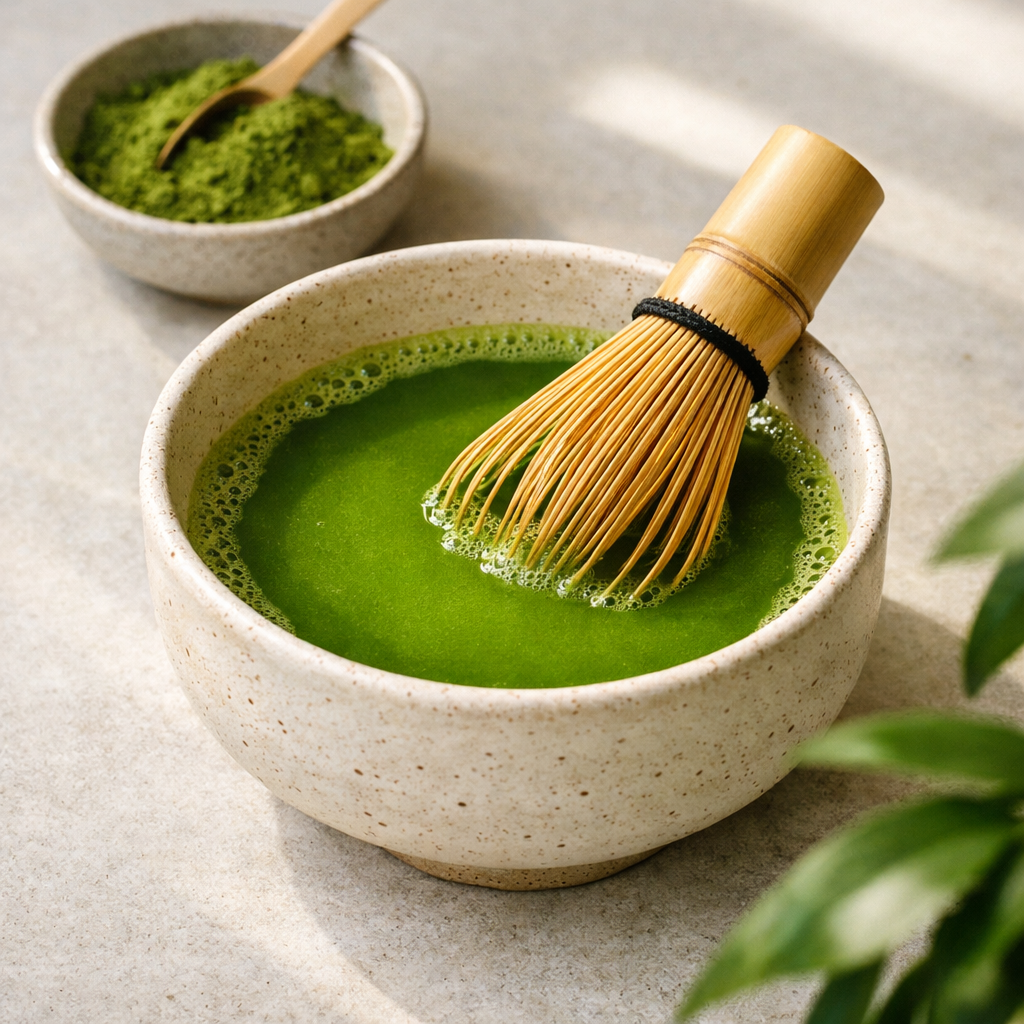
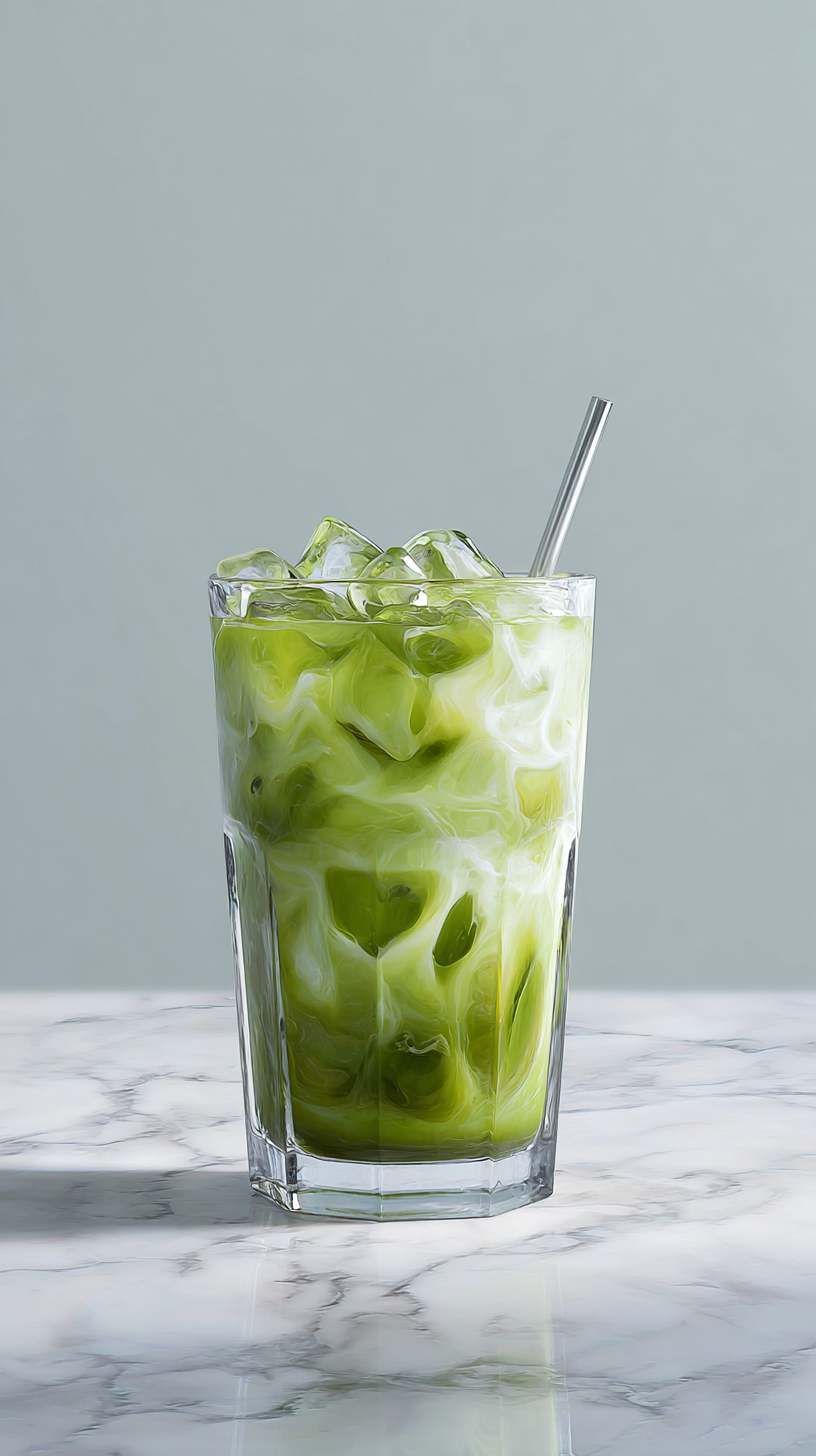
Everything you need to know about choosing the right matcha powder for lattes, dialing in your ratio, and avoiding the most common mistakes.
Why Matcha Grade Matters for Lattes
Not all matcha is created equal, and the grade you choose directly determines whether your latte tastes smooth and vibrant or bitter and flat.
Matcha is graded based on the tea leaves used, how they're shaded before harvest, and how finely they're stone-ground. These factors control three things that matter for lattes: color, flavor, and solubility.
Lower-grade matcha — often labeled "culinary" or "cooking grade" — comes from later harvests with higher catechin content. That means more bitterness and astringency. When you add milk, that bitterness doesn't disappear; it just hides behind dairy fat until the aftertaste arrives.
Higher-grade matcha uses first-harvest leaves (ichiban-cha) that are richer in L-theanine, the amino acid responsible for matcha's characteristic umami sweetness. This sweetness balances milk beautifully, producing a latte that tastes clean rather than muddy.
The rule is simple: if the matcha can't stand on its own whisked with water, it won't perform in a latte.
Ceremonial vs. Latte Grade: The Real Debate
The industry uses "ceremonial grade" and "latte grade" loosely — there's no universal standard. Here's what actually matters:
Ceremonial Grade
- First harvest (spring picking)
- Stone-ground to ~5–10 micron particle size
- Vibrant emerald green color
- Naturally sweet with minimal bitterness
- Dissolves cleanly in water without clumping
Latte Grade (Sometimes Called "Premium Culinary")
- Second or third harvest
- Slightly coarser grind
- Olive or yellow-green hue
- More astringent, designed to punch through milk and sugar
- Lower price point
Our take: You don't need the most expensive ceremonial matcha for lattes, but you do need first-harvest quality. The sweet spot is a matcha that's smooth enough to drink straight but robust enough to hold its flavor against 6–8 oz of milk.
If you want to taste the matcha as the star of the drink rather than a background note, step up to a full ceremonial grade. The difference is immediately visible in the color and detectable in the first sip.
How to Make a Matcha Latte
What You Need (Equipment)
- Matcha bowl (chawan) or wide-mouth mug — room to whisk
- Bamboo whisk (chasen) or electric milk frother — a spoon won't cut it
- Fine mesh sieve — sift to eliminate lumps
- Kitchen scale or measuring spoon — 2g (roughly 1 tsp) per serving
- Kettle with temperature control — or let boiling water sit 2–3 minutes
Ingredients
- 2g (about 1 tsp) matcha powder
- 60–70ml (2–2.5 oz) water at 70–80°C (158–176°F)
- 180–240ml (6–8 oz) milk of choice
Step-by-Step
- Sift the matcha. Sift 2g matcha into your bowl. This takes 15 seconds and prevents clumps.
- Add hot water. Pour 60–70ml water at 70–80°C. Avoid boiling water (above 85°C increases bitterness).
- Whisk vigorously. Whisk in a rapid W or M motion for 15–20 seconds until smooth and frothy.
- Heat and froth your milk. Warm to about 65°C and froth to microfoam.
- Combine. Pour frothed milk over the matcha concentrate. For iced, pour over ice first, then add cold milk.
Water Temperature and Ratios
| Variable | Recommended | Common Mistake |
|---|---|---|
| Water temperature | 70–80°C (158–176°F) | Using boiling water (100°C) |
| Matcha-to-water ratio | 2g : 60–70ml | Too much water, diluting the concentrate |
| Matcha-to-milk ratio | 2g : 180–240ml milk | Under-dosing matcha, making faint green milk |
Key insight: The matcha concentrate should be strong — like a “matcha shot” that gets diluted by milk. If it tastes mellow on its own, it will disappear once milk is added.
For a stronger latte, increase matcha to 2.5–3g rather than reducing milk volume. Nippon Matcha's Everyday Matcha is calibrated for a 2g standard dose — it's concentrated enough at that weight to hold up in a full 8oz latte.
Milk Pairing Guide
Oat Milk
Best for: Creamy, café-style lattes
Why it works: Natural sweetness + good frothing texture.
Watch out for: Sweetened/flavored versions can mask matcha—choose unsweetened barista edition.
Almond Milk
Best for: Lighter, nuttier lattes
Why it works: Subtle nuttiness pairs with earthy notes.
Watch out for: Can be thin and separate—use barista blend and match temperatures.
Whole Dairy Milk
Best for: Rich, velvety lattes
Why it works: Forgiving texture and smooth mouthfeel.
Watch out for: Can mute delicate floral notes in premium matcha.
Coconut Milk
Best for: Tropical-leaning, dairy-free lattes
Why it works: High fat carries flavor well.
Watch out for: Dominant coconut taste—use sparingly.
Common Matcha Latte Mistakes
- Using boiling water. Water above 85°C amplifies bitterness. Let boiled water cool 2–3 minutes.
- Not sifting. Matcha clumps easily—sifting fixes most texture issues.
- Using too little matcha. 1g in 8oz milk is green-tinted milk. Use 2g minimum.
- Adding matcha directly to milk. Hydrate matcha in water first, then add milk.
- Storing matcha improperly. Keep airtight and opaque, ideally refrigerated. Use within 4–6 weeks after opening.
- Choosing the wrong grade. Late-harvest matcha tends to taste bitter and flat in milk.
What Equipment Do You Actually Need?
Minimum viable setup
- Fine mesh sieve
- Handheld frother
- Wide mug or bowl
- A way to heat water below boiling
Upgraded setup
- Bamboo chasen (80-prong recommended)
- Matcha bowl (chawan)
- Variable-temperature kettle
- Kitchen scale accurate to 0.1g
You don't need a $200 setup. A simple frother and sieve can produce a café-quality latte when your matcha and water temperature are correct.
Frequently Asked Questions
What is the best matcha powder for lattes?
The best matcha for lattes is a first-harvest Japanese matcha with a vibrant green color and a smooth, slightly sweet flavor. It should dissolve cleanly and hold up against milk.
Can you use ceremonial matcha for lattes?
Yes. Ceremonial matcha makes a sweeter, more nuanced latte. The trade-off is cost if you drink lattes daily.
What water temperature should I use for matcha lattes?
Use 70–80°C (158–176°F). Water above 85°C increases bitterness.
How much matcha should I use per latte?
Use 2g (about 1 level teaspoon). For a stronger latte, increase to 2.5–3g.
Why does my matcha latte taste bitter?
Most often: water too hot, low-grade matcha, or old/oxidized matcha.
Is oat milk or almond milk better for matcha lattes?
Oat milk typically performs better for flavor and microfoam. Almond milk can work but may be thinner and separate.
Do I need a bamboo whisk to make matcha?
No. A handheld frother works well for lattes. Sifting matters more than the tool.